
Drought-Proofing Your Cut Flower Patch
This year, my carefully planned successions of flowers were supposed to give me a staggered harvest all summer long, but they’ve arrived almost all at once. Plants that should be waist-high are only knee height. So I decided to investigate what's happening to the flowers this summer.
Here's what I found, and what I'm doing to help them through the drought and heat of summer 2026. Watch the video below, or read on to find out more.
UK Heatwave and Drought 2026: The Numbers So Far
2026 has been a record-breaker.
Heat:
Warmest spring on record for England and Wales
May: 35.1°C at Kew Gardens (old record, 1922, beaten by 2°C)
June: 37.3°C — hottest June day ever recorded in the UK
8 days over 34°C so far — a new record
First year ever with 35°C+ in May, June and July
Rain (or lack of it):
July rainfall so far: just 3% of average
Reservoirs: 5% below normal for the time of year
Rivers like the Cam, Swale and Tone: exceptionally low
Hosepipe bans in force across much of the country
It’s been hot and dry, at the same time. That combination is why everyone’s plants have been struggling this year. Read on to find out exactly how it happens.
How Heat Stress Affects Plant Growth
Unlike most animals, plants can't walk into the shade to protect themselves so they’ve developed various mechanisms to cope with heat. One of the mechanisms is utilising heat shock proteins, they’re like tiny plant repair crews that refold proteins damaged by high temperatures.
That defence costs energy, at the cost of other processes like photosynthesis, which is itself one of the most heat-sensitive processes in the plant.
How dahlias respond to heat
A dahlia study compared the response of plants at 25°C (control), 35°C and 40°C.
35°C: photosynthesis and chlorophyll dropped significantly, but recovered within a week once cooled
40°C: damage occurred within 2 days, and it didn't fully reverse
Why successions are coming all at once
Heat is stress, and stress usually pushes plants to flower faster. They want to reproduce as quick as possible before things get worse. That's why my two ammi successions sown weeks apart are flowering together.
One exception worth knowing: chrysanthemums do the opposite — heat delays their flowering. Most cut flowers speed up under heat, but it's not a universal rule.
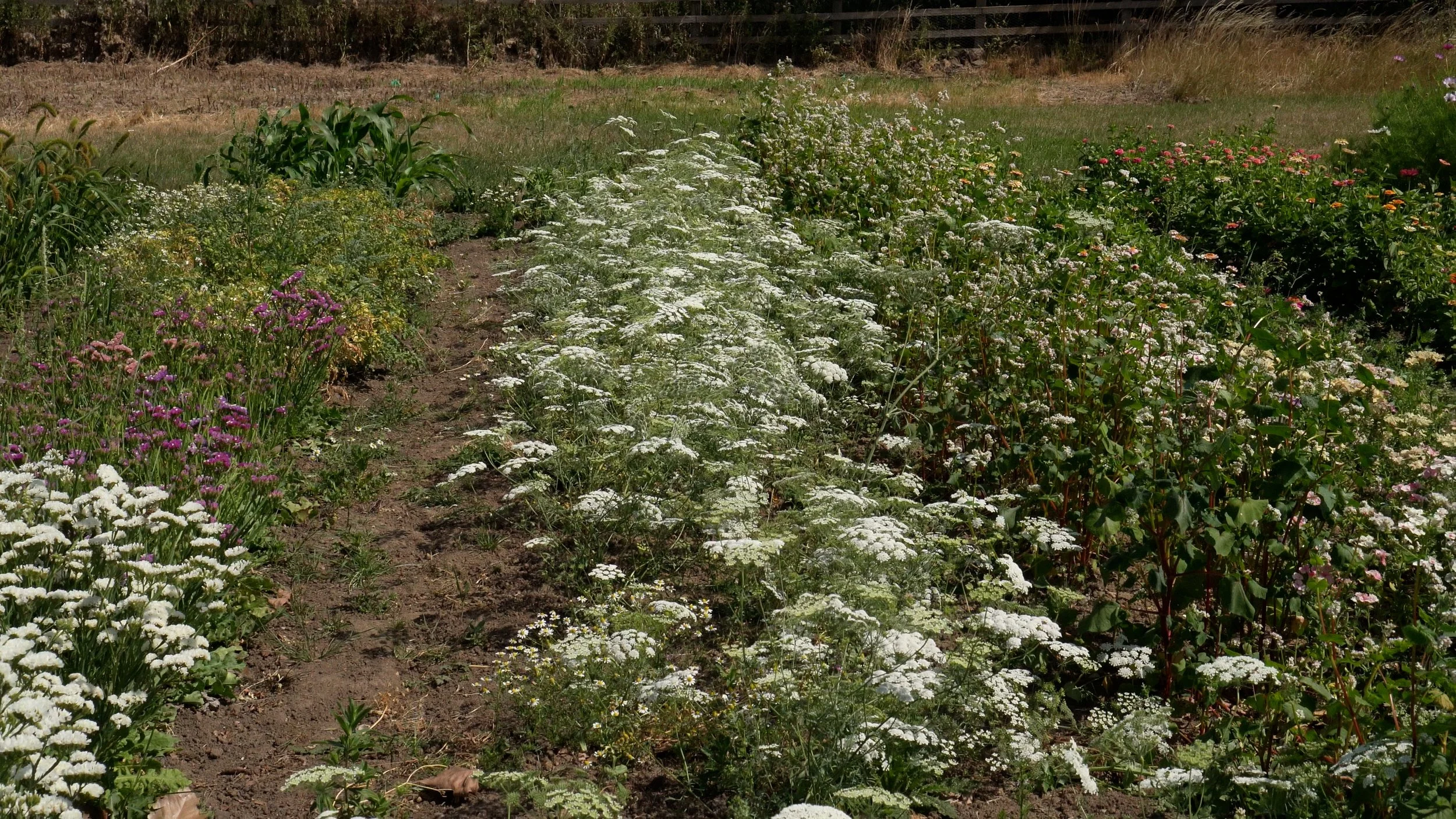
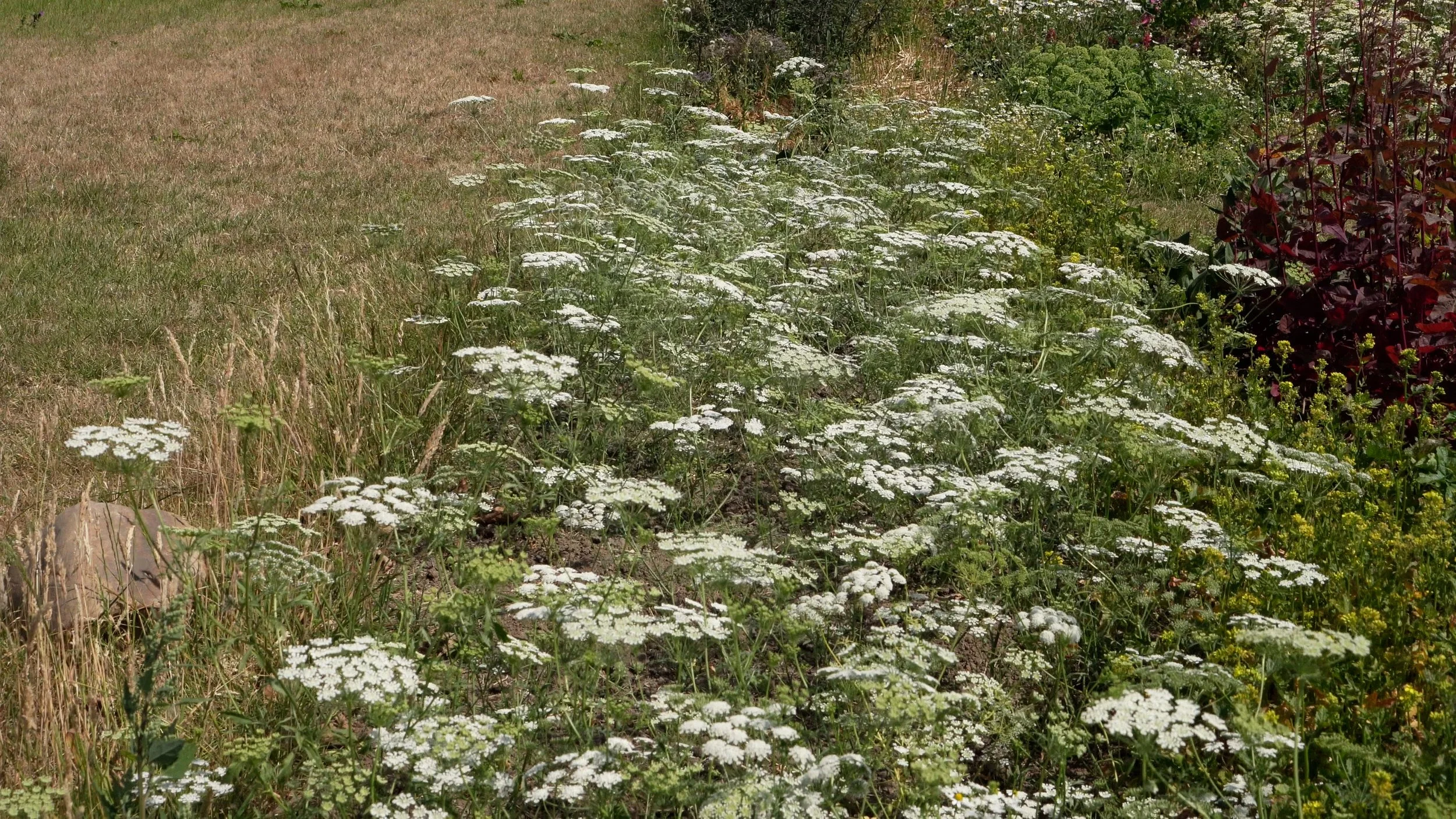
Above: Two Ammi successions sown weeks apart, arriving at the same time
At the extreme end, heat can abort flower buds altogether and reduce viable seed set, worth knowing if you're seed-saving this year.
How Drought Stress Affects Plant Growth
The key mechanism is turgor pressure. Water pressure inside cells is what makes stems rigid and lets them lengthen. Less water in the soil means less cell pressure and less growth. That's the actual mechanical reason for stunting.
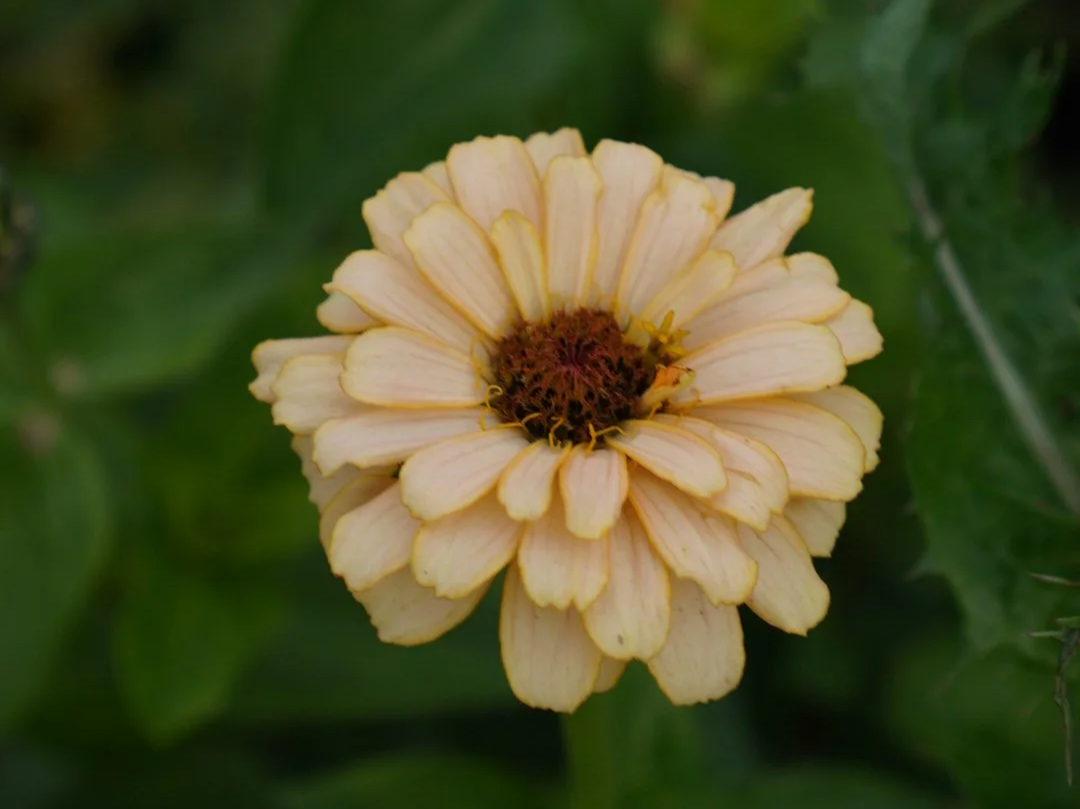
Zinnia water stress study: a zinnia study under severe water stress (20% of normal field capacity) found:
Dry mass was reduced by 60%+
Flower size was reduced by 48%
Two more things happen at once during drought and heat:
Stomata close to save water, but that also reduces the CO2 plants need for photosynthesis, so growth slows further as a side effect of self-protection.
"Drought escape" drought can push plants to flower early rather than grow bigger first.
So if you put heat and drought together, which is what we’ve been experiencing this season, and a plant is slowing growth, sealing in water, and rushing to flower, all at once. It's the plant's emergency plan.
Why Succession Sowing Fails in a Heatwave
Here's the mechanism, simplified: "days to maturity" on a seed packet isn't really about days. It's about accumulated heat. Researchers call this growing degree days (GDD). Every plant needs a fixed amount of heat (growing degree days) before it matures, whatever the calendar says.
Quick example, for the curious:
Add together the day's max + min temperature, divide by two, subtract the plant's base temp (10°C for zinnias, 5°C for snapdragons). A 28°C/17°C day gives 12.5 GDD. Zinnias need ~1,100 GDD total to flower.
The hotter the day, the more GDD banked, the faster a plant matures. So if succession one grew in normal conditions but succession two hit a heatwave mid-growth, succession two can rack up heat fast enough to catch up.
Three heatwaves this year meant my successions accumulated heat in an uneven way and instead of maturing in a nice staggered way, they all raced to the finish and bunched up together.
Why Are My Flowers Stunted? Heat and Drought Explained
When it’s hot, plants transpire more and lose water faster, but at the same time there’s less water in the soil to replace it. So the combination of heat stress and lack of water compounds the problem and adds to the plants stress levels. This results in shorter stems through reduction in turgor pressure and plants going to seed as an ‘emergency exit’.
Can You Sow Later in a Heatwave? Succession Timing Explained
Here’s a hypothesis i’ve been thinking about this summer. Normally I stop sowing successions in June, because a normal season doesn't leave enough warmth for anything sown later to mature before autumn.
But: if heat is compressing my existing successions, could a later sowing still flower in time, because it needs less time to hit its heat total?
The risk: if the weather cools back to normal, that later sowing won’t mature in time before the last frost kills it off, and I’ve ‘wasted’ a bed on it.
It's a gamble on whether it stays hot. Would you risk it?
How to Water Plants Properly During a Drought
Quick note: where your water comes from e.g. butts, greywater or rainwater harvesting is a whole topic on its own, especially with hosepipe bans in force. I recommend saving it where you can to reduce dependence on mains.
Water deeply, not often. A daily splash encourages shallow root systems. Deep, infrequent watering encourages roots to search deeper instead.
Check it was enough: dig 15cm (6in) down after watering… if it's still dry, water more.
Water when it's cool and still. In the morning or on cloudy days, to reduce evaporation loss.
Prioritise: new/establishing plants need consistent water. Established perennials mostly only need help in drought. Water your most stressed plants first.
Know a real stress signal: afternoon drooping in full sun is often normal. Morning drooping, before the heat even starts, is a red flag.
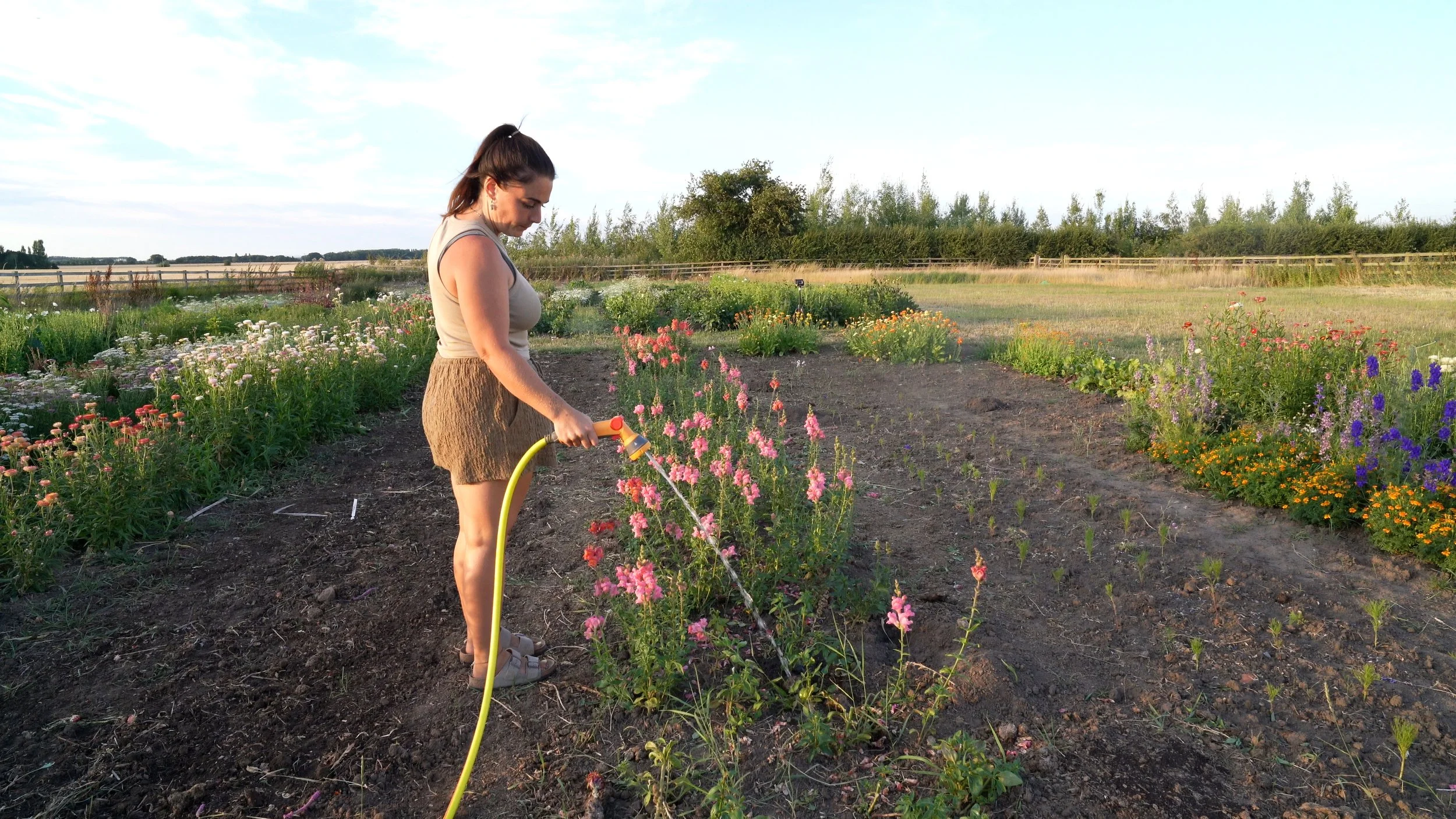
Watering deeply less often
Best Mulch for Drought: Reducing Water Loss in Soil
I ran my own thermometer test, in three spots around the flower farm:
| Location | Temperature |
|---|---|
| Bare, freshly-seeded bed | 37°C |
| Cover-cropped pathway (mustard/lupin) | 28.8°C |
| Under a layer of leaves | 33.7°C |
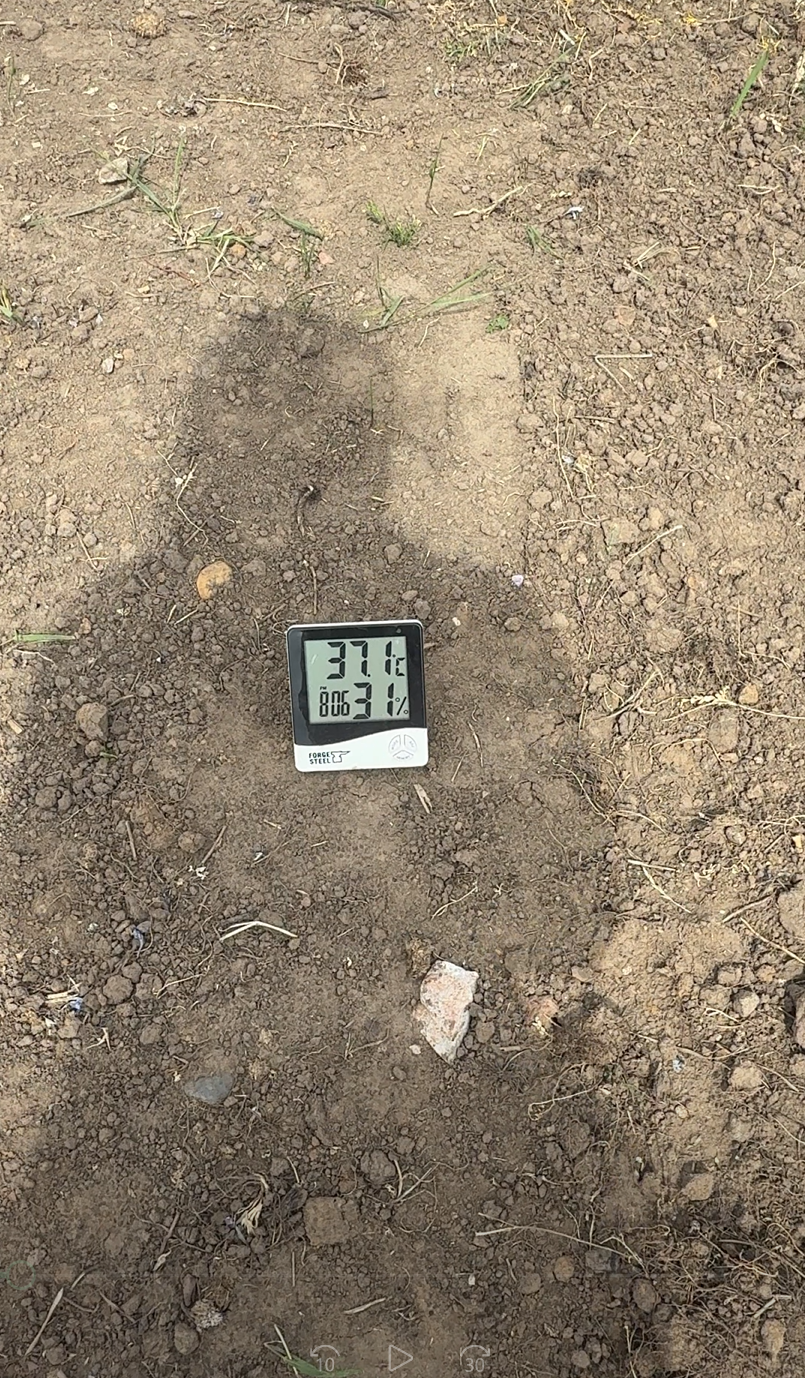
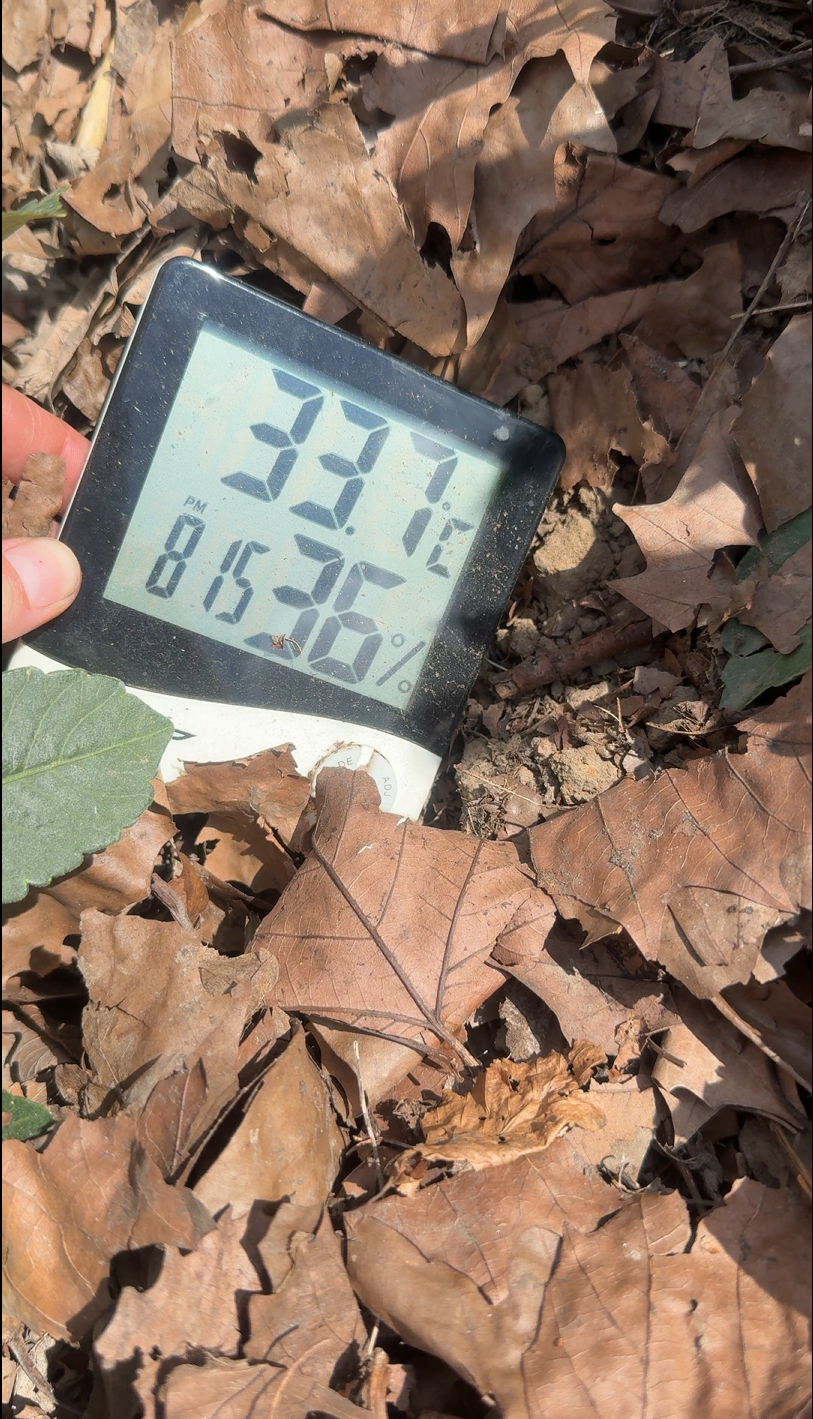
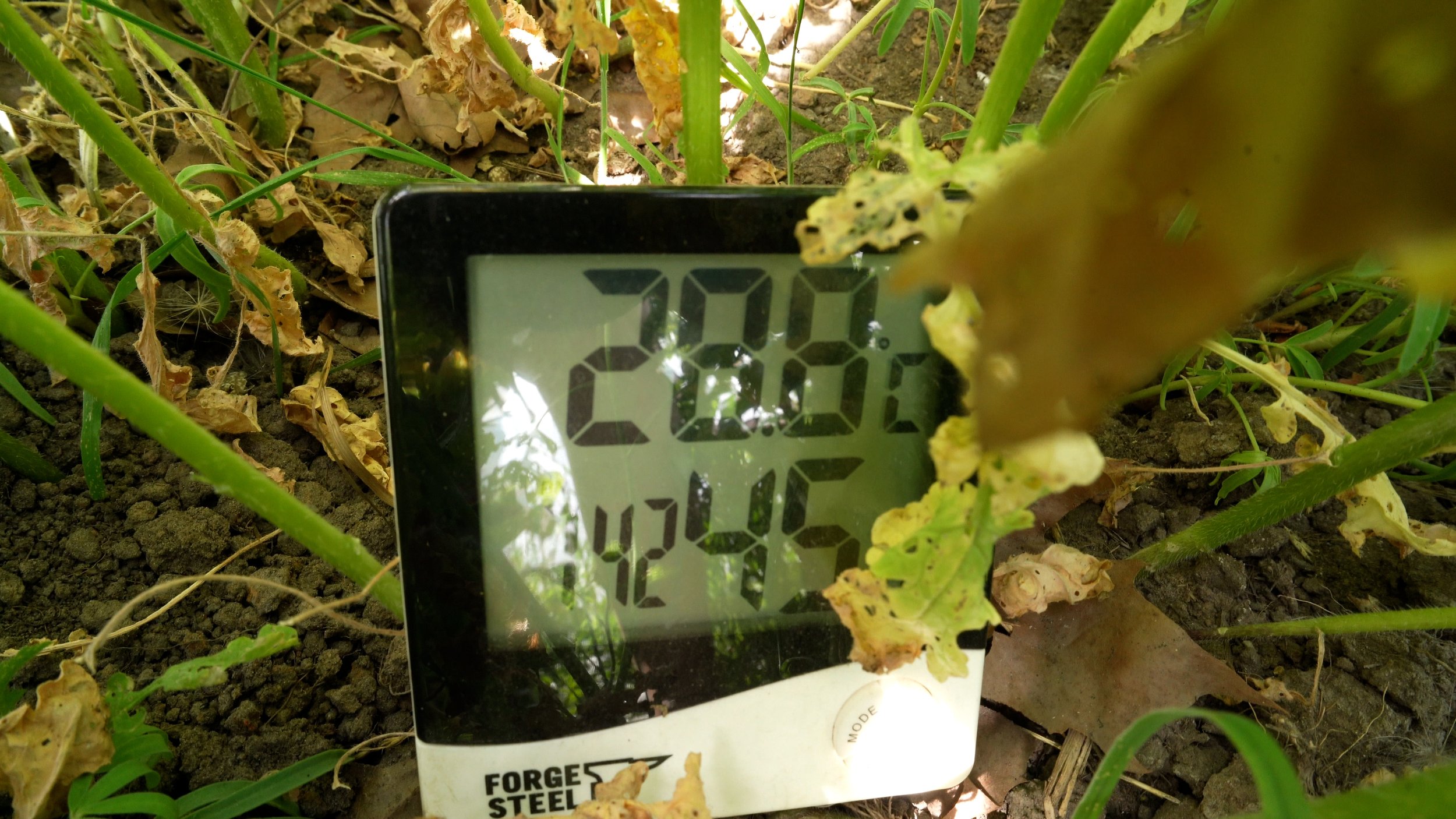
That’s over 8 degrees difference, by adding plants as shade. Mulch blocks direct sun (where most evaporation happens) and steadies soil temperature. Aim for a 2-inch layer of woodchips, straw, leaves, grass clippings, or a living cover crop.
Colour matters: dark mulch (woodchip, compost) absorbs more heat which is great in spring, but not ideal mid-heatwave. Light mulch (straw, hay) reflects more solar radiation and keeps soil cooler which is better for reducing heat specifically.
But… any mulch beats no mulch at all.
The bonus with organic mulches (compost, leaf mould, manure): as mulches break down, they build organic matter which helps with water retention. One commonly cited figure: a 1% increase in soil organic carbon adds roughly 354,000 litres of water-holding capacity per hectare (silty-clay loam, top 30cm). That’s a huge number, and it also helps drainage in a wet winter, something that I struggled with earlier on this year.
How to Make Your Garden More Drought Tolerant
What's thriving on my patch this year: achillea, feverfew, setaria grass, helichrysum and symphyotrichum are all doing well and growing to a good height. I encourage you to take notes on what's doing well on yours. But remember soil and climate differences mean my list won't necessarily match yours.
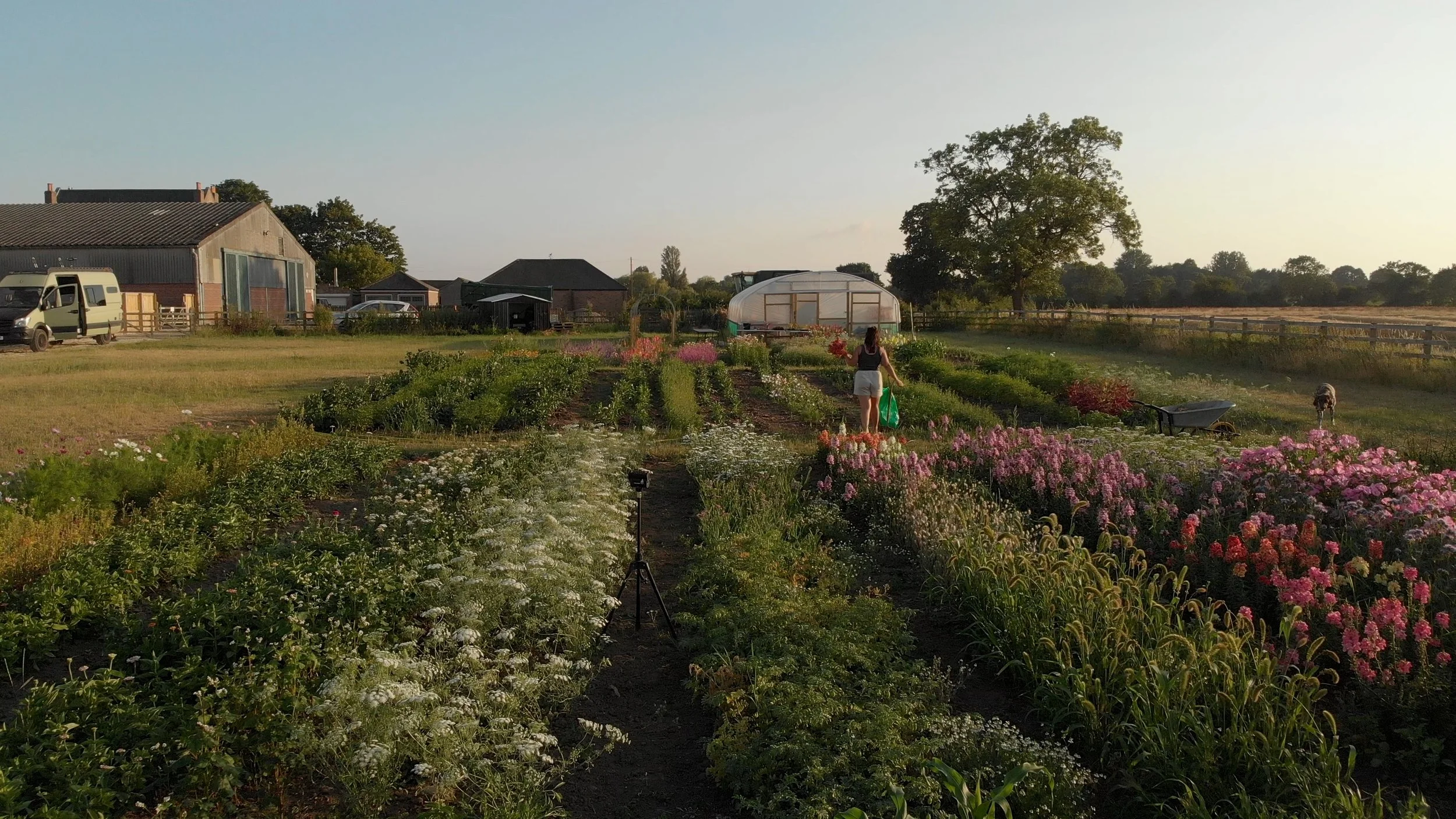
have a walk around your plot and see what’s thriving
Notice most of my list are perennial plants. There is a shift towards growing more perennials across the industry. Last year I visited Rachel from Green and Gorgeous who has made a huge investment in perennials on her farm, she shares lots of great insights about them in the video below:
Caveat: new perennials still need consistent watering for their first year or two while roots establish. The resilience comes later.
Two more quick changes you can make to increase success during a drought/ heatwave:
Stop sowing in the greenhouse/polytunnel in summer: mine hit 50°C inside recently, which stops germination. Sow outside in the shade instead.
Chop back anything that's gone over fast: I'm cutting my snapdragons hard and giving them a good water to push a second flush. Worth trying on achillea, feverfew and helichrysum too.
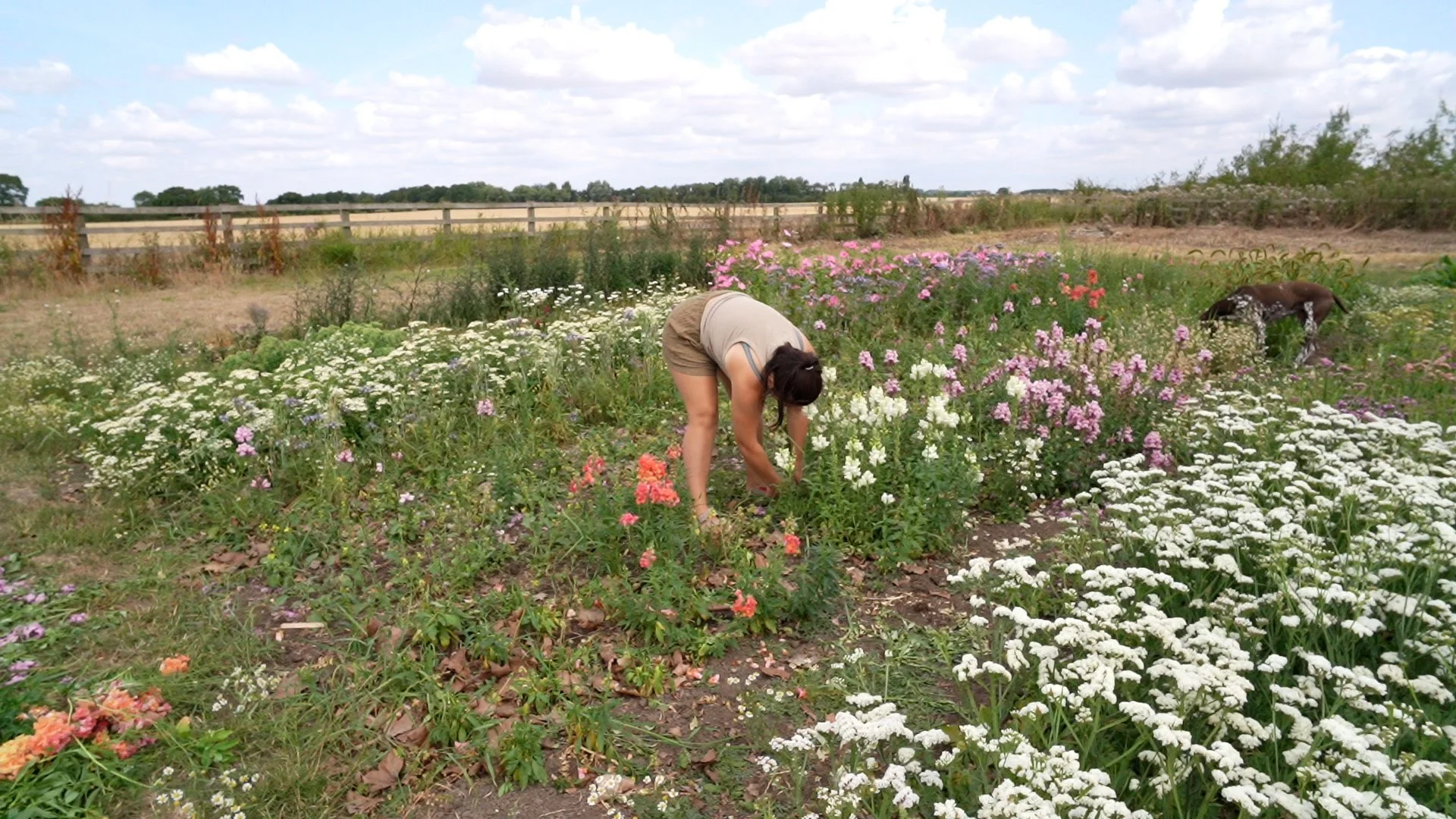
Cutting back snapdragons hoping for a second flush
Final Thoughts on Growing Through Heat and Drought
Hot, dry summers like this one might not be a one-off. Understanding what's actually happening to my plants has changed how I'm farming through it and hopefully it helps with yours too.