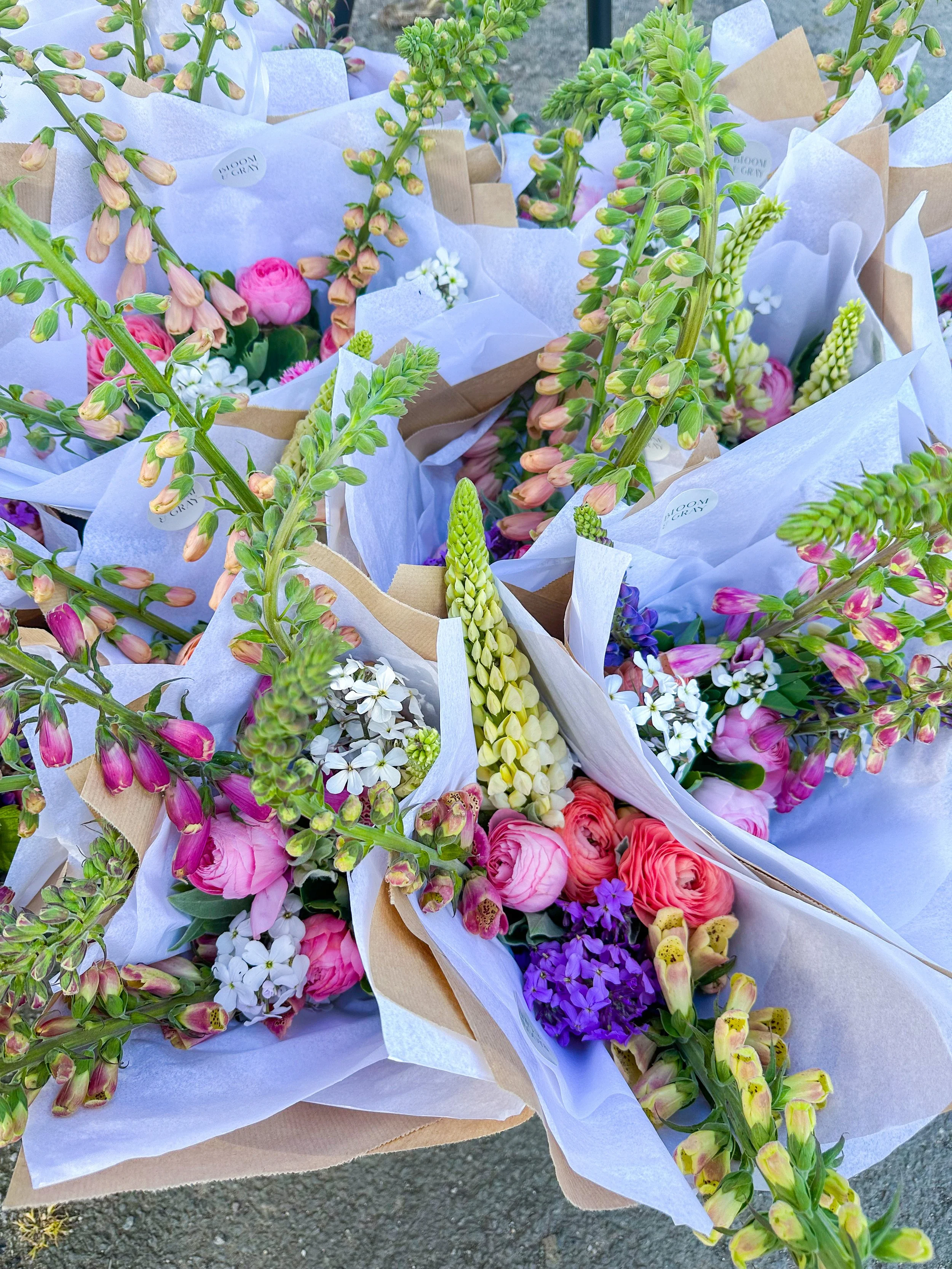
6 Biennial Flowers to Sow Now for an Abundance of Early Summer Flowers Next Year
One of the biggest challenges for flower growers is the gap between spring and summer.
The tulips, narcissus and other spring bulbs have finished flowering, but many of the summer workhorses such as dahlias, zinnias and sunflowers are still weeks away from producing their first blooms. This "spring gap" can leave gardeners, flower farmers and cut flower growers short of flowers just when they want them most.
Fortunately, there is a solution: biennials.
By sowing biennial flowers now, you can establish strong plants this summer that will overwinter and burst into flower next year, providing valuable stems during the transition from spring into summer.
What Is a Biennial?
A biennial is a plant that completes its life cycle over two years.
During the first year, the plant focuses on producing foliage and roots. It then goes dormant over winter before flowering, setting seed and completing its life cycle in the second year.
For cut flower growers, this means sowing seeds during summer, planting them out before autumn, and then harvesting flowers the following spring or early summer.
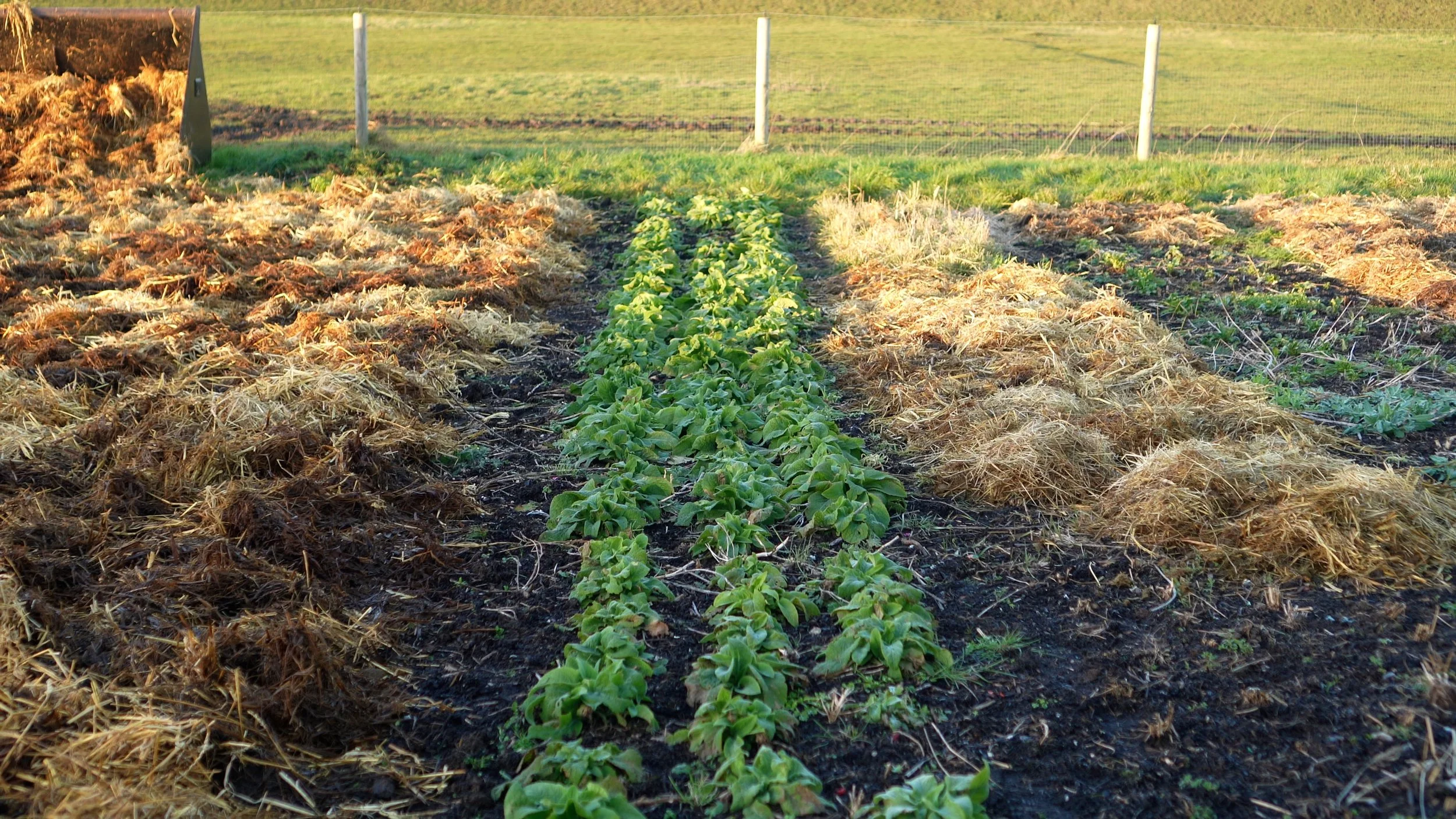
I aim to sow my biennials in June and July and have them planted out by August or September. This gives them enough time to establish strong root systems before winter arrives.
1. Honesty (Lunaria annua)
Honesty is one of the most versatile biennials you can grow.
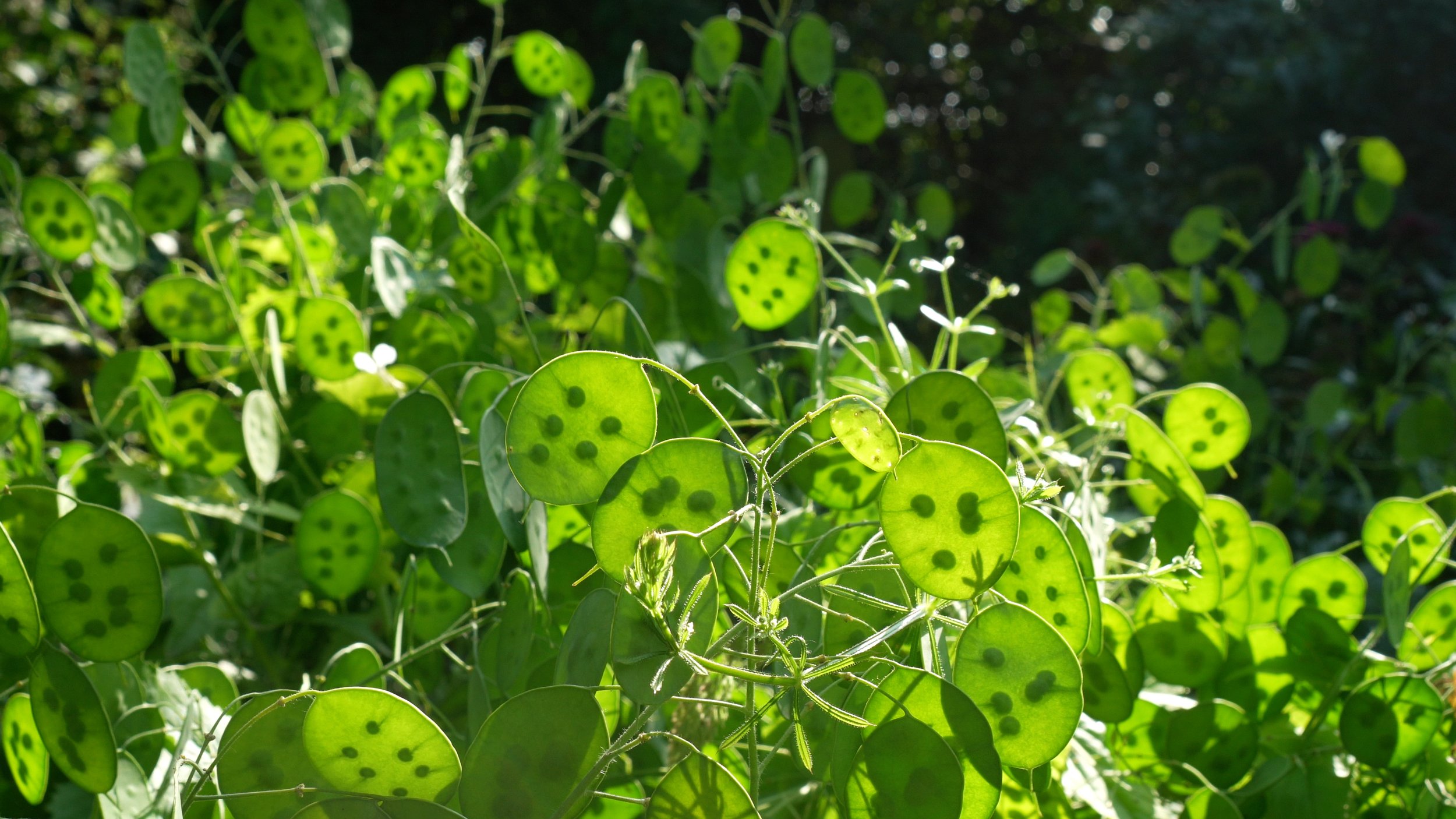
While it produces attractive white or purple flowers in spring, its real value comes from its distinctive disc-shaped seed pods. These can be used fresh in arrangements or dried and peeled to reveal the beautiful pearlescent membranes that make honesty so popular in dried flower work.
How to Sow Honesty
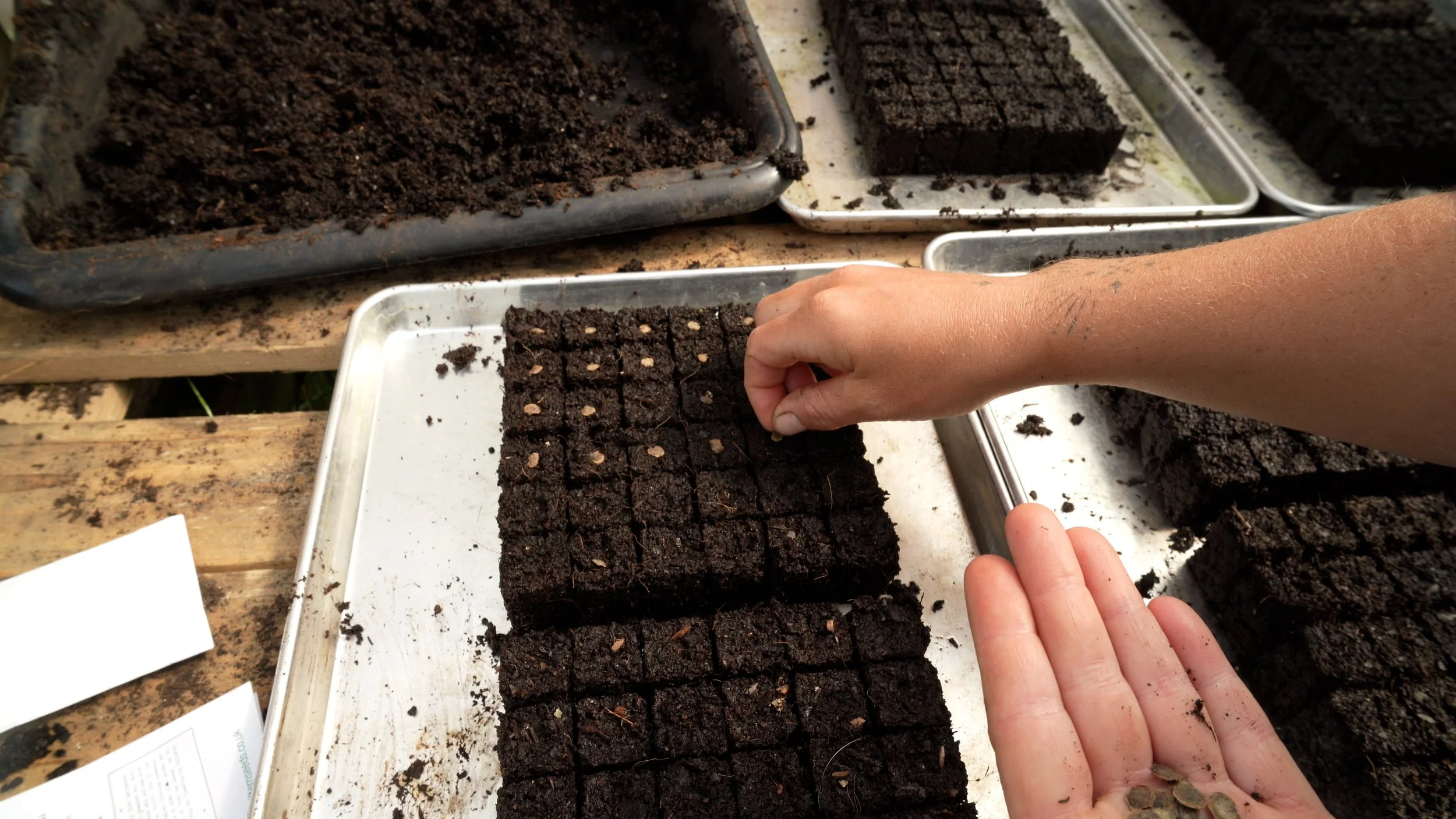
Sow onto the surface of moist compost.
Cover lightly with a thin layer of compost.
Germinate at 16–18°C.
Germination can be slow and erratic.
If necessary, cold stratify seeds for 6–8 weeks before returning them to warmth.
Plant seedlings at approximately 12 inches (30cm) apart.
Because honesty belongs to the brassica family, young plants may require protection from caterpillars and other pests.
2. Sweet William (Dianthus barbatus)
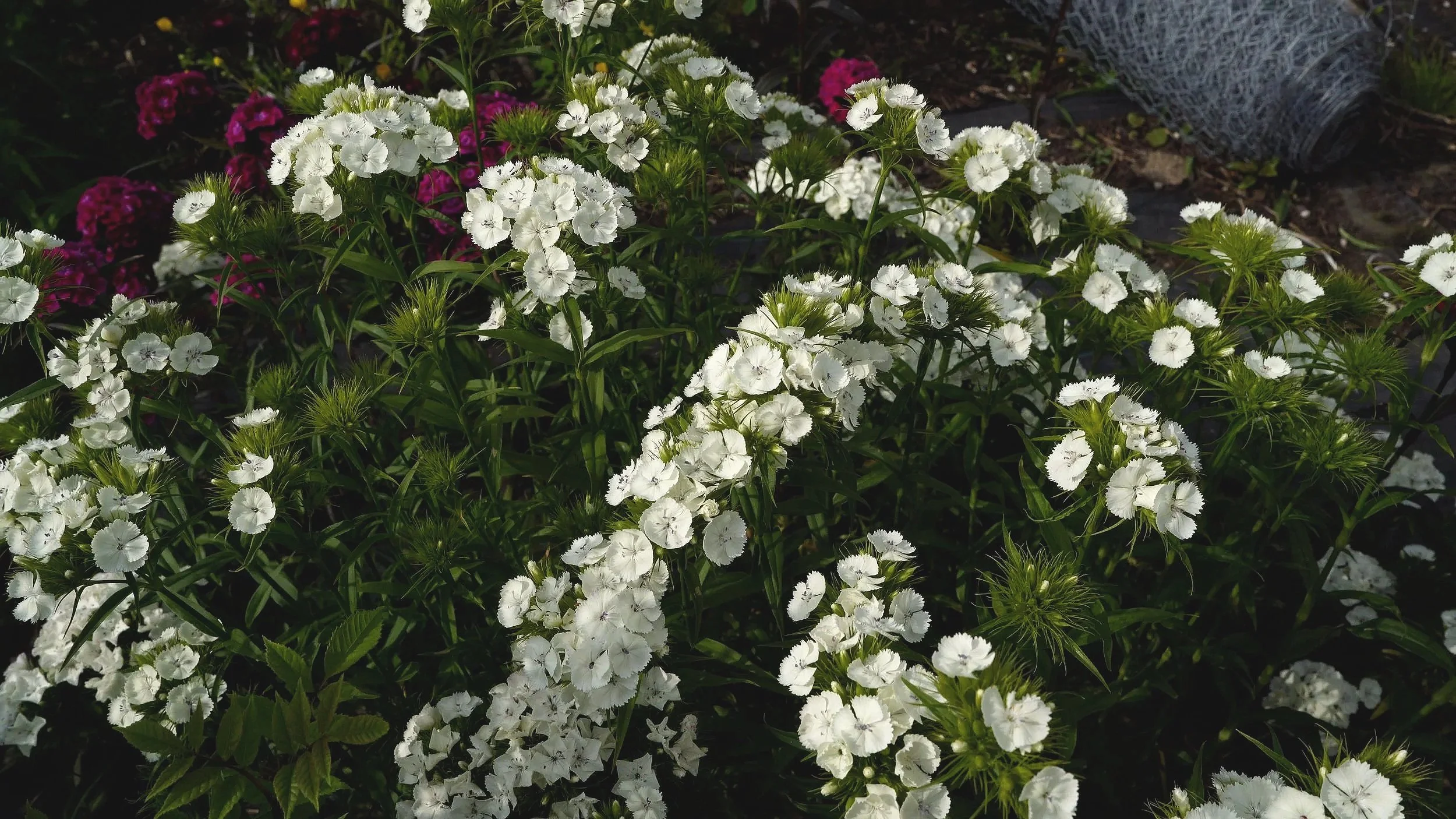
Sweet William is one of the most reliable early summer cut flowers.
The blooms are beautifully scented and have a nostalgic charm that customers often love. My favourite varieties are 'Albus' and 'Newport Pink', which fit well within a soft, pastel colour palette.
Although technically a short-lived perennial, I treat Sweet William as a biennial to ensure a reliable crop each season.
How to Sow Sweet William
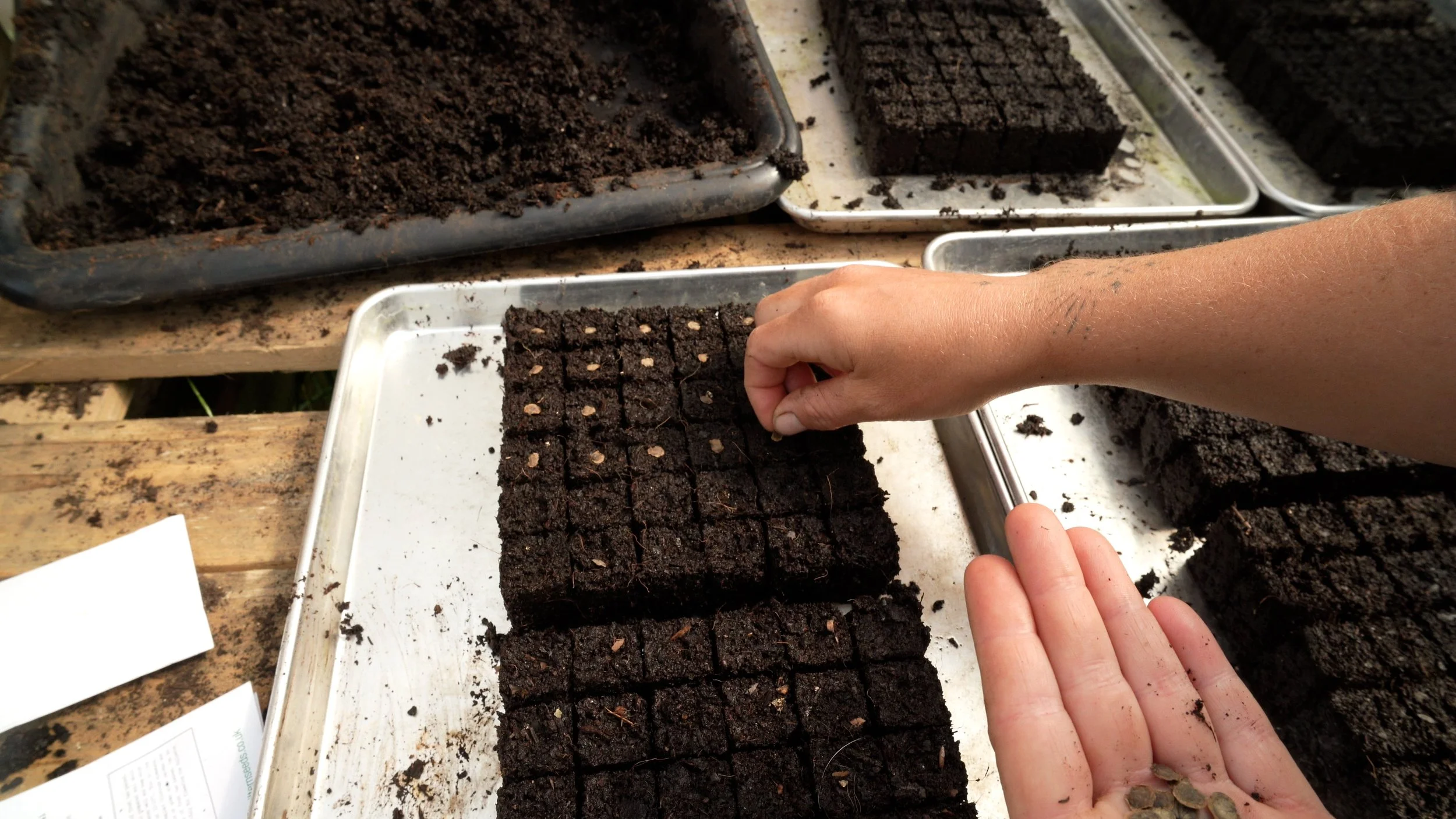
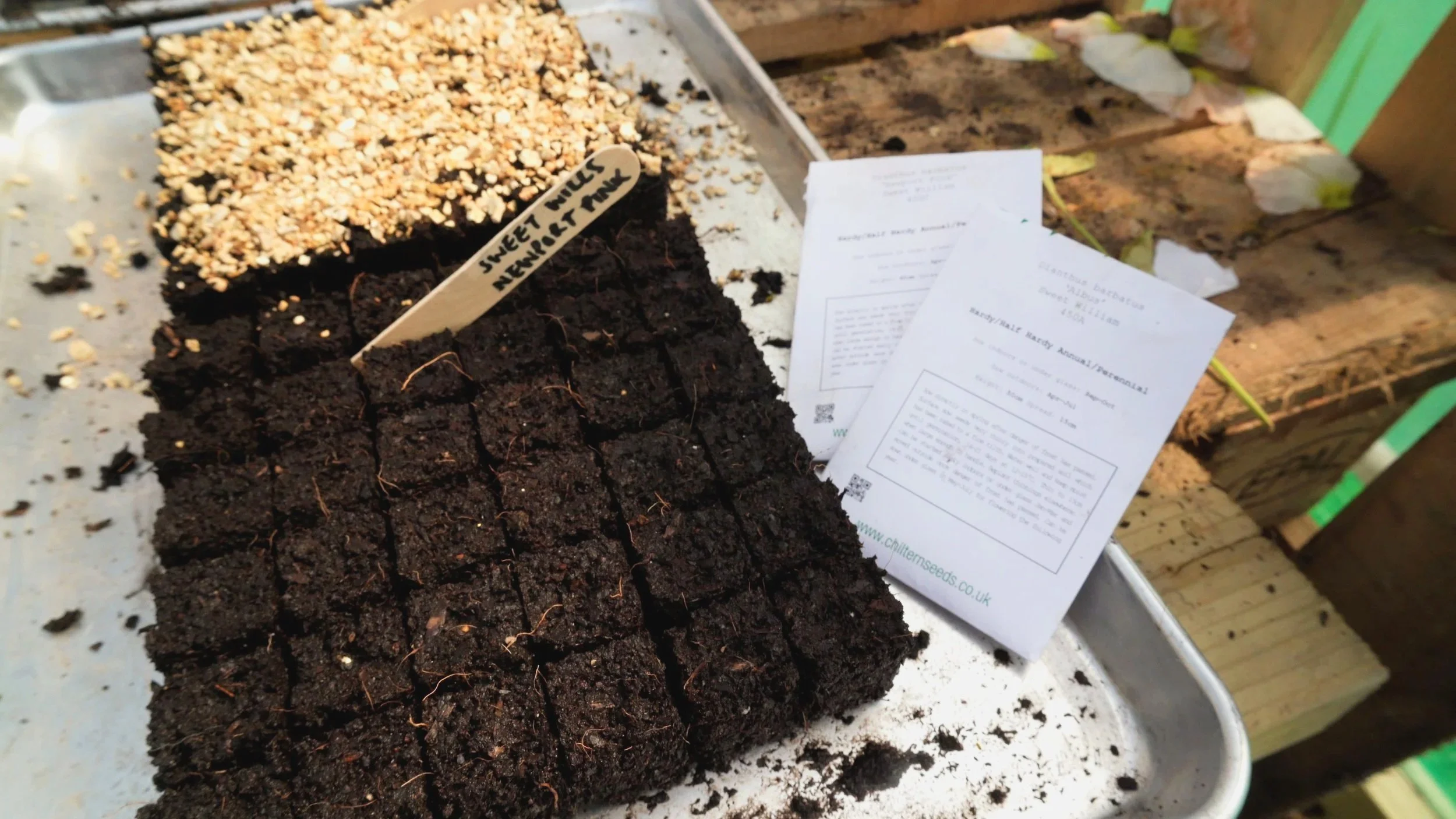
Sow into trays or soil blocks.
Cover lightly with vermiculite.
Germinate at 12–15°C.
Expect germination within two weeks.
Plant out at approximately 9 inches (23cm) spacing once seedlings are established.
3. Sweet Rocket (Hesperis matronalis)
Sweet Rocket is one of my favourite flowers for filling bouquets in late spring and early summer.
The airy stems provide movement and texture, while the flowers have a wonderful fragrance. Traditional varieties are available in white and purple, although there are some beautiful pale lavender selections available too.
How to Sow Sweet Rocket
Sow onto compost and lightly cover.
Germinate at 15–18°C.
Germination typically takes 3–4 weeks.
Space plants around 12 inches (30cm) apart.
For cut flower production, harvest the main stem first to encourage additional side shoots. Sweet Rocket self-seeds readily, so remove spent flowers if you don't want seedlings appearing throughout the garden.
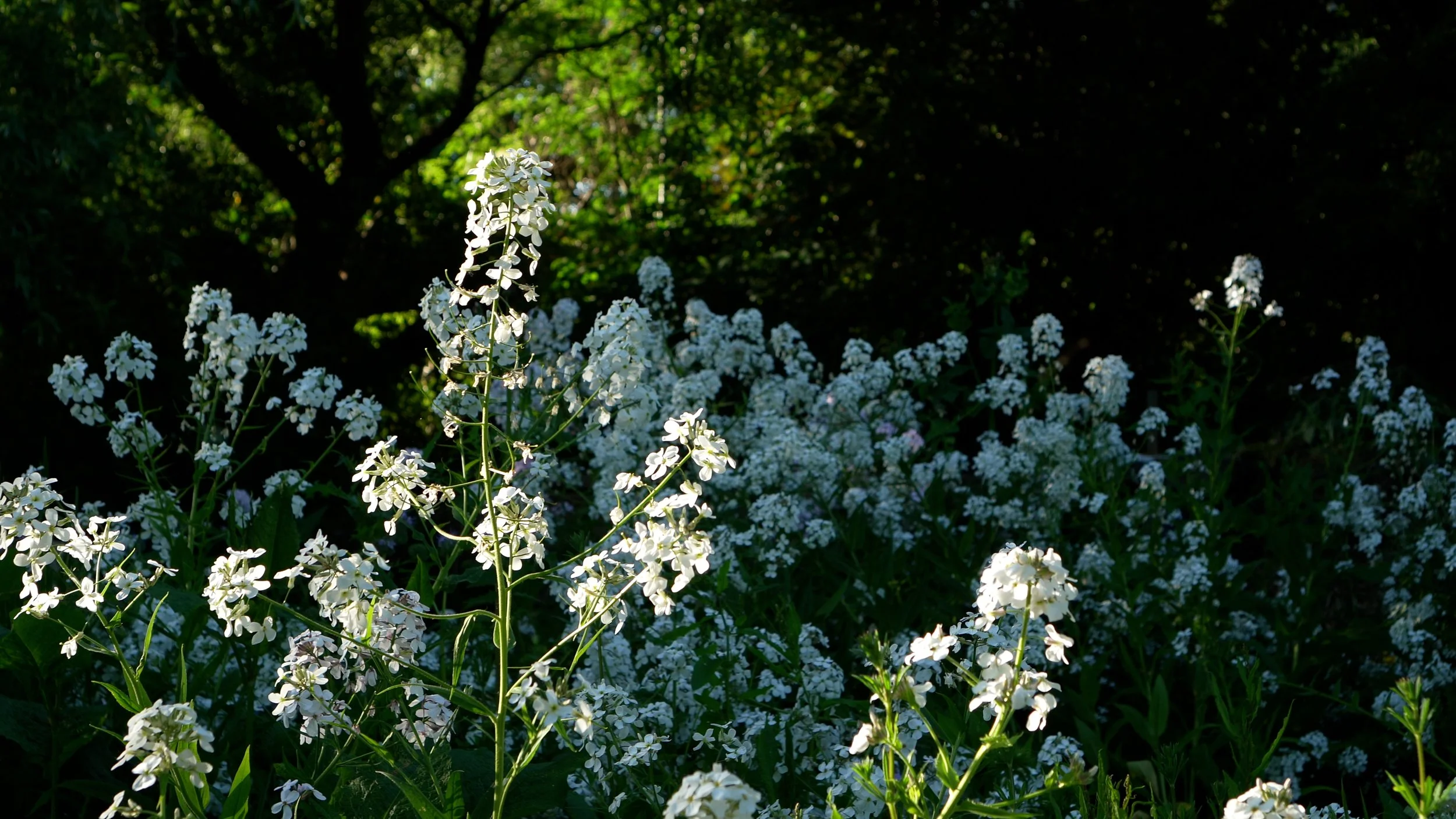
Sweet Rocket (Hesperis matronalis)
4. Canterbury Bells (Campanula medium)
Canterbury Bells create some of the most romantic flowers of early summer.
Their bell-shaped blooms bring a cottage garden feel to bouquets and are available in white, pink, purple, single and double forms.
There are annual, perennial and biennial Campanula varieties available. For this purpose, we're focusing on the biennial forms.
How to Sow Canterbury Bells
Sow seeds on the surface of compost.
Do not cover; seeds require light to germinate.
Maintain temperatures of 16–18°C.
The seeds are extremely small, so handle them carefully when sowing.
Harvest stems when roughly one-third of the flowers on the spike have opened.
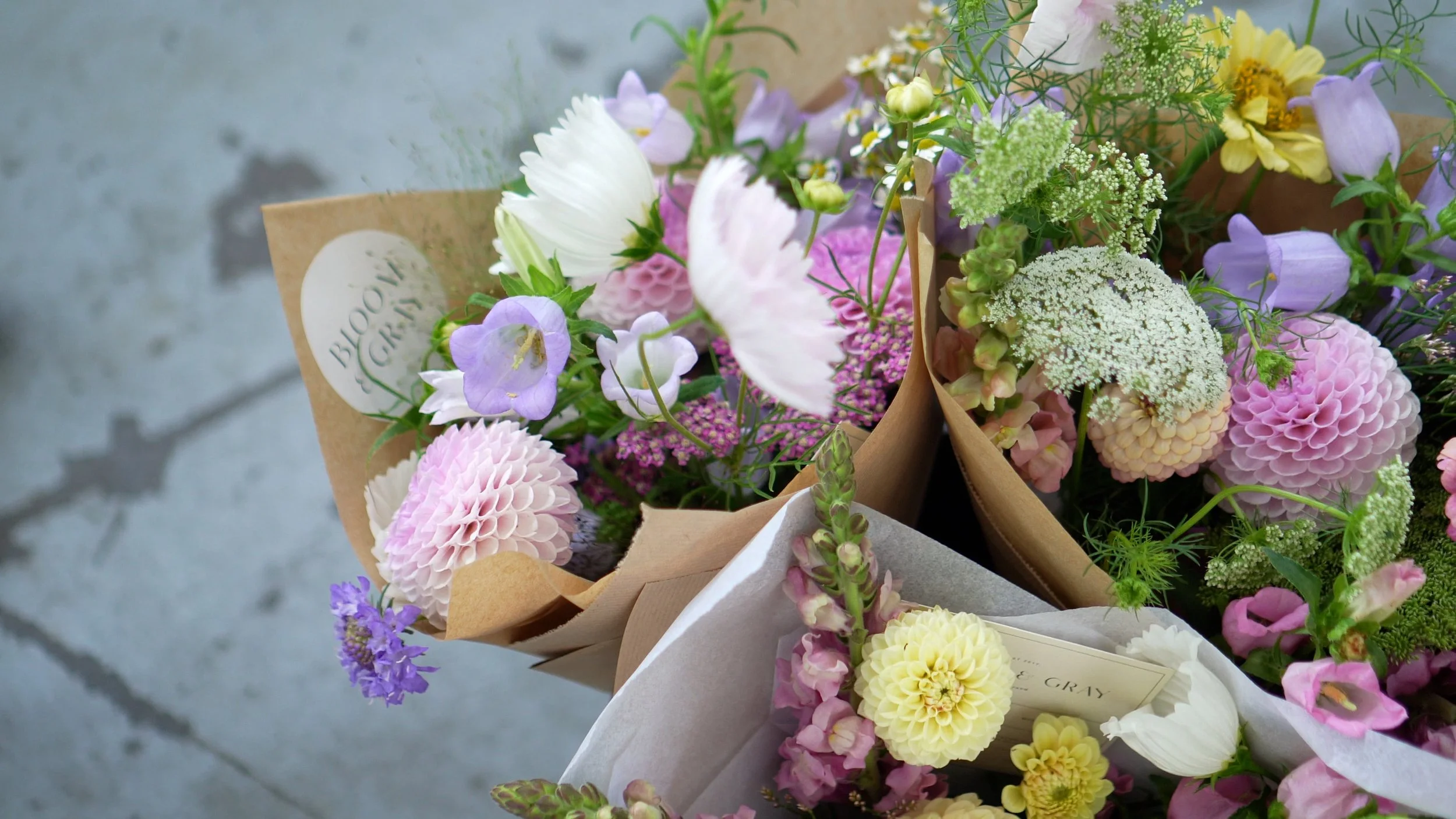
Canterbury Bells (Campanula medium) adds a cottage garden feel to bouquets
5. Wallflowers (Erysimum)
Wallflowers are often overlooked as cut flowers, but they are among the earliest flowers available in spring.
Available in shades of cream, yellow, pink, orange, red and purple, they provide colour at a time when few other flowers are available.
Like Sweet William, wallflowers are technically short-lived perennials but are commonly grown as biennials.
How to Sow Wallflowers
Sow onto moist compost.
Cover lightly with vermiculite.
Grow on through summer.
Plant out at around 12 inches (30cm) spacing.
The plants will establish during autumn before producing flowering stems the following spring.
6. Foxgloves (Digitalis)
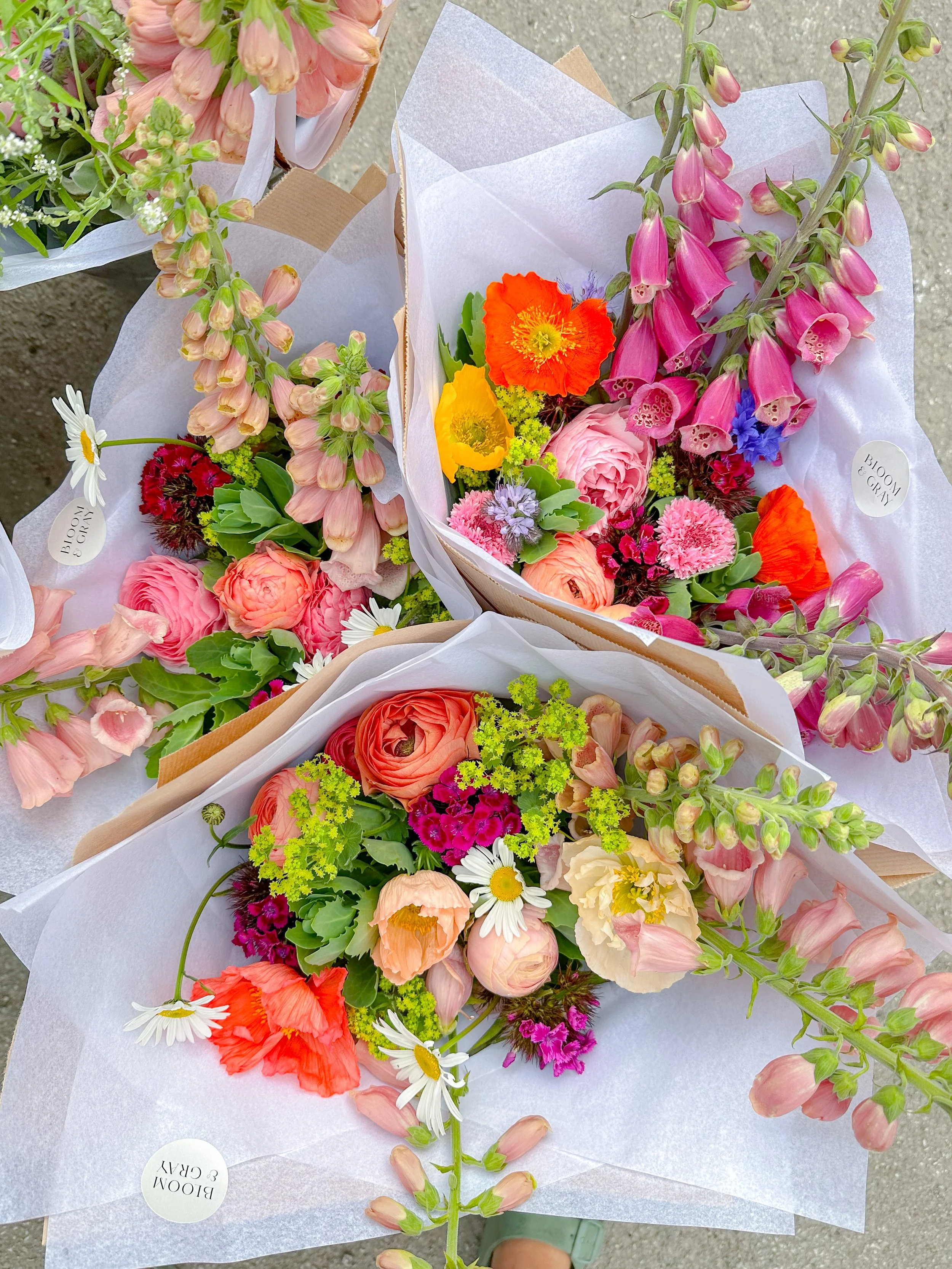
Few flowers make as much impact in the garden or bouquet as foxgloves.
Their tall spires add height, structure and elegance to arrangements, while modern breeding has introduced a wide range of colours and forms.
Some varieties such as 'Dalmatian' and 'Camelot' can flower in their first year, while others including 'Sutton's Apricot', 'Pam's Choice' and 'Pink Gin' are best grown as biennials.
How to Sow Foxgloves
Sow seeds on the surface of compost.
Do not cover the seed.
Germinate at 15–20°C.
Keep seedlings growing strongly through summer.
Plant out at approximately 12 inches (30cm) spacing before autumn.
Harvest flower spikes when around one-third of the florets are open.
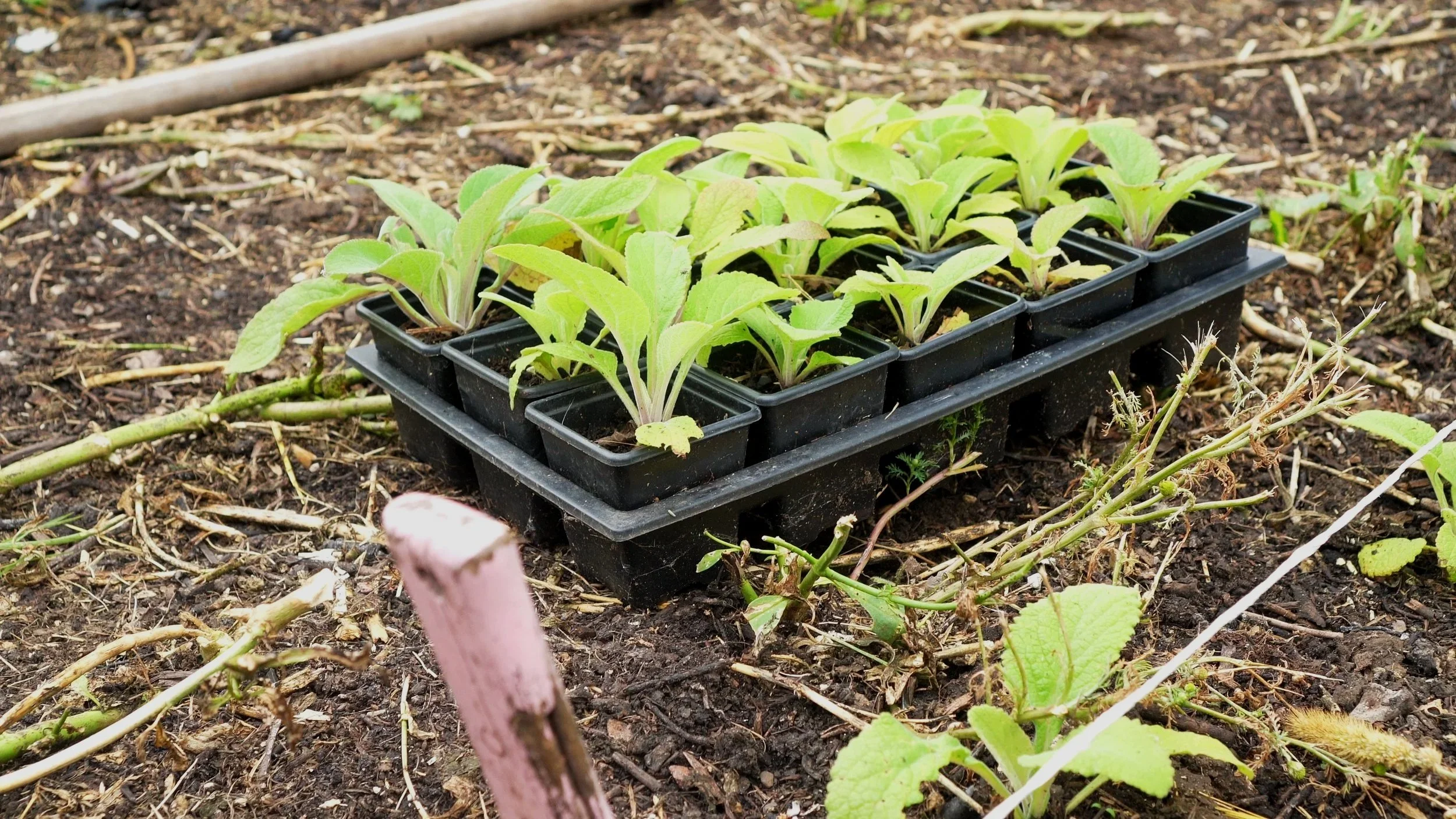
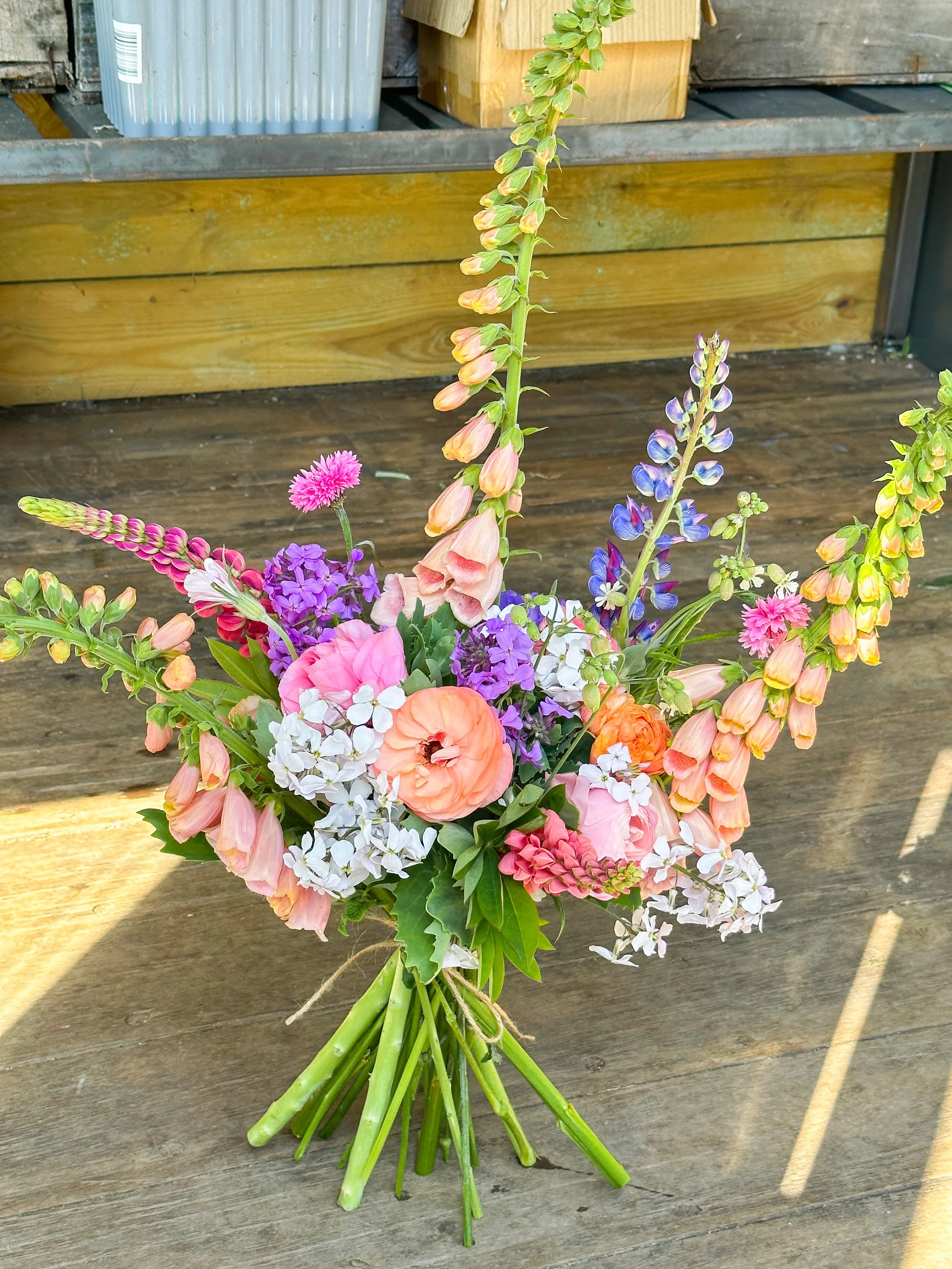
Why Biennials Deserve a Place in Every Cutting Garden
Biennials require a little forward planning, but they reward growers with flowers exactly when they are needed most.
By sowing these six flowers during summer, you'll create a bridge between your spring bulbs and your summer annuals, helping to ensure a continuous supply of flowers throughout the growing season.
If you've ever found yourself short of flowers in early summer, make this the year you start incorporating biennials into your growing plan. Your future self will thank you next spring.