How to Pinch Cut Flowers for More Blooms and Better Harvests
Pinching plants can feel completely counterintuitive. After spending weeks or months nurturing your seedlings, the last thing you want to do is chop off the growing tip.
However, this simple technique can dramatically increase the number of stems you harvest from many cut flower varieties. Whether you're growing flowers for sale, or simply filling your home with blooms, understanding when and how to pinch can make a big difference.
In this guide, we'll explain the science behind pinching, how to do it correctly, which flowers benefit from it, and which flowers should be left alone.
What Is Pinching?
Pinching is the process of removing the growing tip of a young plant.
Most plants naturally exhibit a growth pattern known as apical dominance. The main growing tip produces hormones that suppress the growth of side shoots lower down the stem. This encourages the plant to grow upward and produce one dominant flower stem.
When the growing tip is removed, those hormones can no longer suppress the side shoots. The plant redirects its energy into multiple branches, creating a bushier plant with more flowering stems.
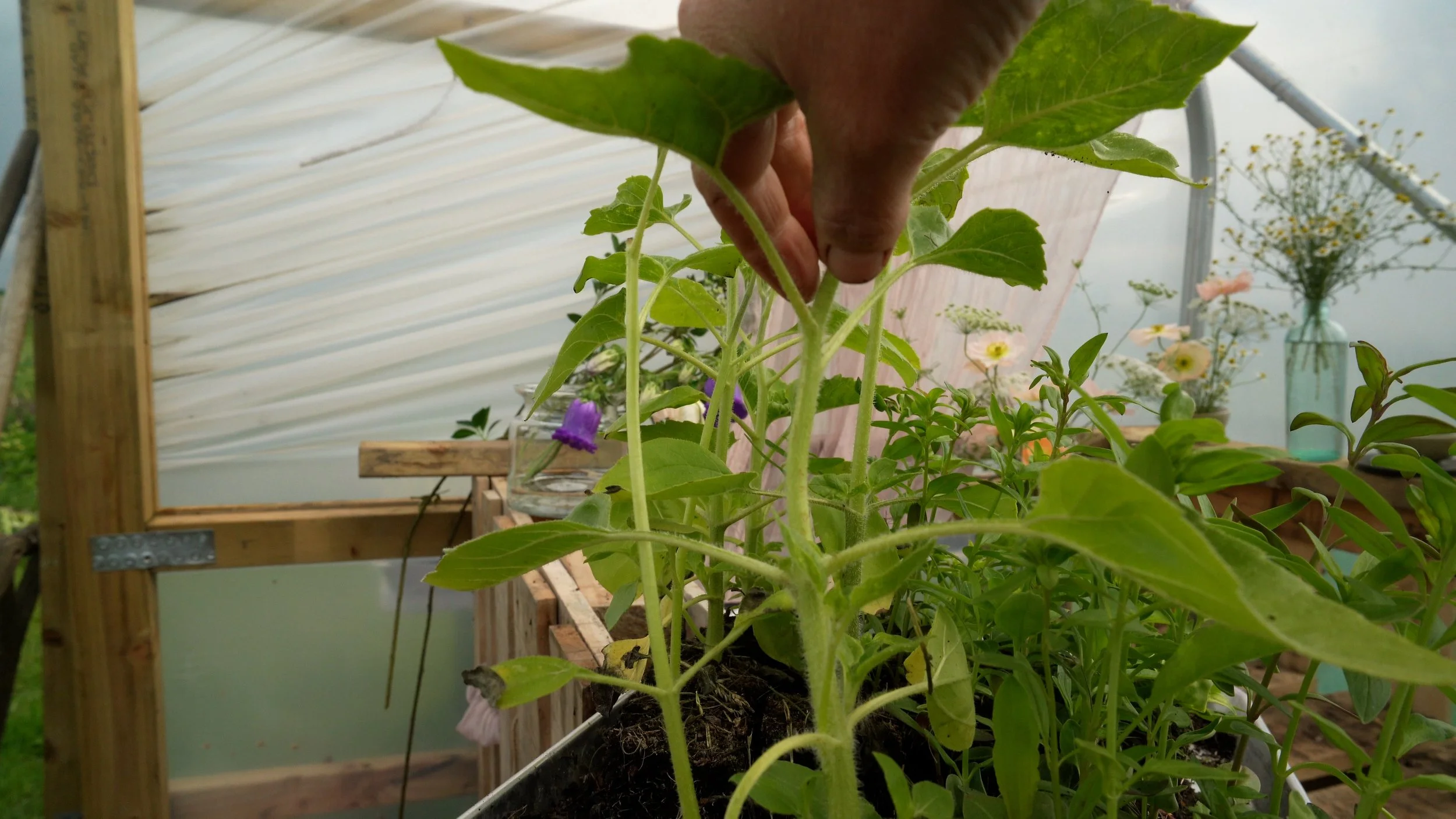
Pinching branching sunflowers
The Benefits of Pinching cut flower plants
The biggest advantage of pinching is that it encourages a plant to produce multiple stems instead of a single main stem.
For cut flower growers, this can mean:
More harvestable stems per plant
A longer harvesting window
Bushier, more productive plants
Better value from limited growing space
For home gardeners, it simply means more flowers to enjoy throughout the season.
The Trade-Offs
Pinching isn't a magic trick that makes a plant more productive overall, it simply changes how the plant distributes its energy.
If you leave a plant unpinched, you'll usually get:
One large, strong flower stem followed by smaller side shoots
Earlier blooms
If you pinch it, you'll usually get:
Multiple stems
Slightly smaller flowers
Flowering delayed by 10–14 days
Neither approach is right or wrong. It depends on your goals.
Many growers choose to pinch some plants and leave others untouched, giving them both early flowers and a larger harvest later in the season.
When Should You Pinch?
For best results, wait until a plant is:
15–30cm (6–12 inches) tall
Well established
Producing several sets of true leaves
Growing actively without signs of stress
Avoid pinching plants that have recently been transplanted or are suffering from drought, heat stress, or pest damage.
Healthy plants recover much more quickly.
How to Pinch Plants Correctly
Pinching cut flower plants is simple.
Locate a healthy leaf node (where leaves and branches emerge from)
Identify a pair of leaves with side shoots forming in the leaf axils.
Remove the growing tip just above that node.
Use your fingers or a clean pair of snips.
Within a few days, you'll often see new side shoots beginning to develop.
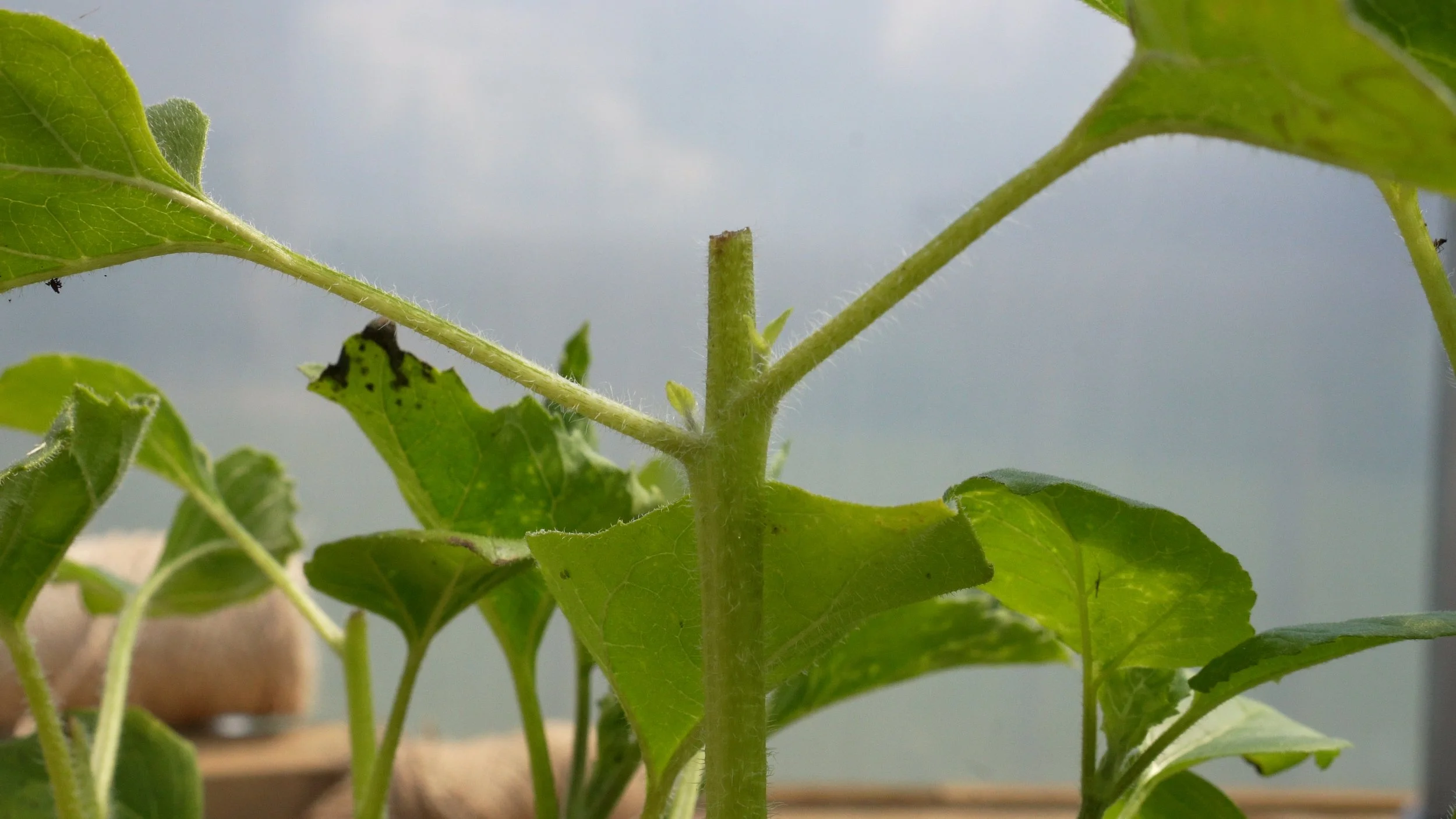
A pinched branching sunflower with side shoots emerging from the leaf axils
Flowers That Benefit From Pinching
Cosmos
Cosmos is one of the easiest and most rewarding flowers to pinch.
Removing the growing tip encourages multiple branches and creates a much bushier plant.
Cosmos will eventually branch naturally, but pinching makes the process more even and predictable.
Zinnias
Many growers feel nervous about pinching zinnias because they often look as though they're about to flower.
However, pinching encourages multiple flowering stems and generally results in a more productive plant.
Simply remove the growing tip above a healthy set of leaves.
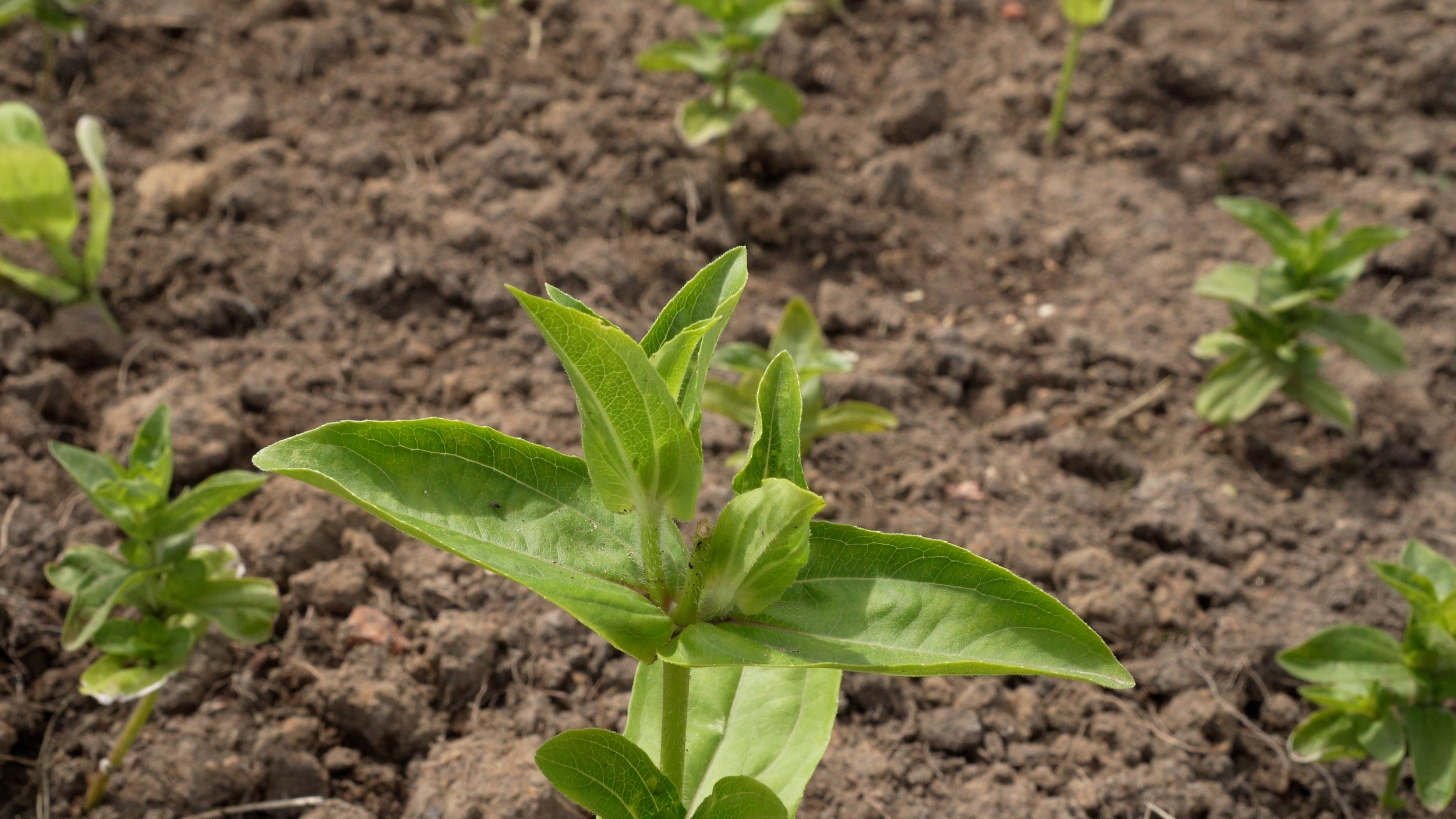
A pinched zinnia producing side shoots
Celosia
Celosia can be a little confusing because some varieties respond well to pinching while others do not.
Good candidates for pinching:
Plume celosia
Wheat celosia
Usually best left unpinched:
Cockscomb celosia varieties
The cockscomb types produce their most impressive flower heads when allowed to develop naturally.
Annual Phlox
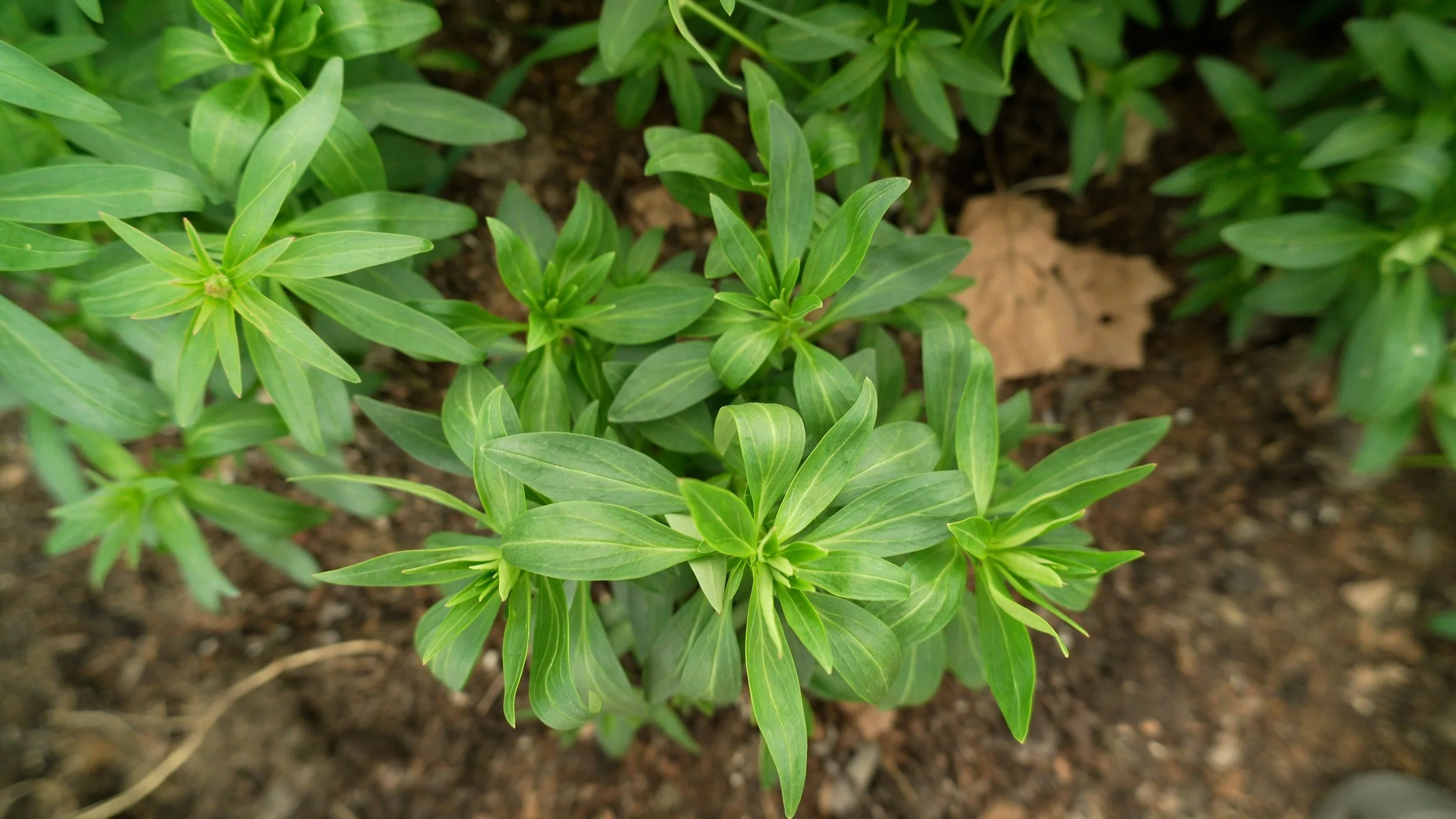
Annual phlox responds particularly well to pinching.
The first flowers often appear on short stems that aren't ideal for cutting. Pinching encourages stronger branching and produces longer, more useful stems later in the season.
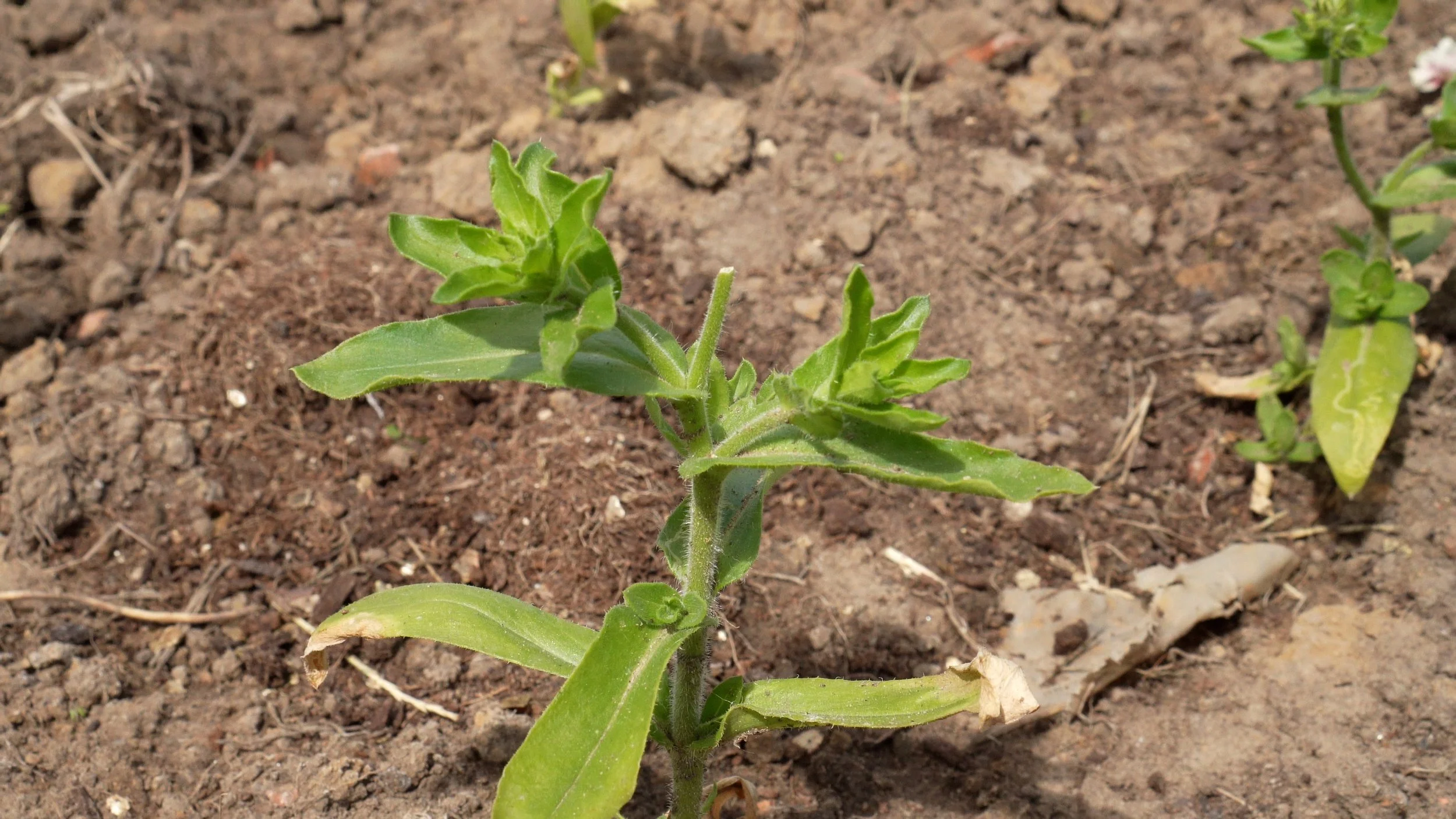
Pinched Phlox
Dahlias
Pinching dahlias is one of the best ways to create a strong, well-shaped plant.
Wait until the plant has:
3–4 sets of true leaves
Reached around 20–30cm in height
Then remove the growing tip above a leaf node.
Many growers effectively pinch their dahlias when taking cuttings in spring, which achieves the same effect. The rooted cutting will still display apical dominance, so these can be pinched.
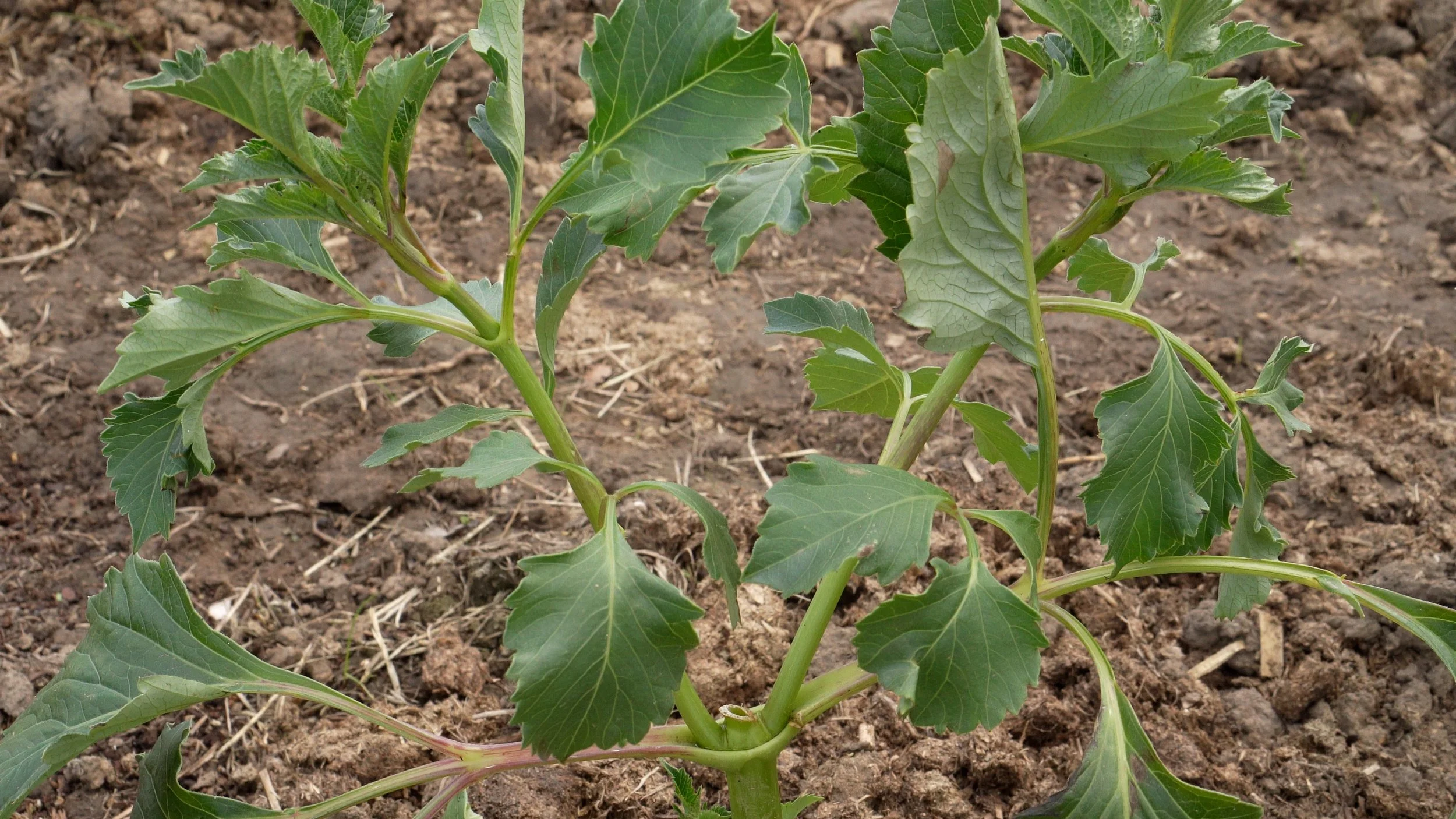
Flowers Where Pinching Is Optional
Some flowers fall into a grey area where pinching depends on your goals.
Larkspur
Larkspur naturally produces a strong main stem that many growers value highly.
Pinching can encourage multiple stems, but they will generally be smaller and less robust than the original flower spike.
You might choose to pinch if:
You want more stems per plant
You need smaller stems for arrangements
You want to delay flowering slightly
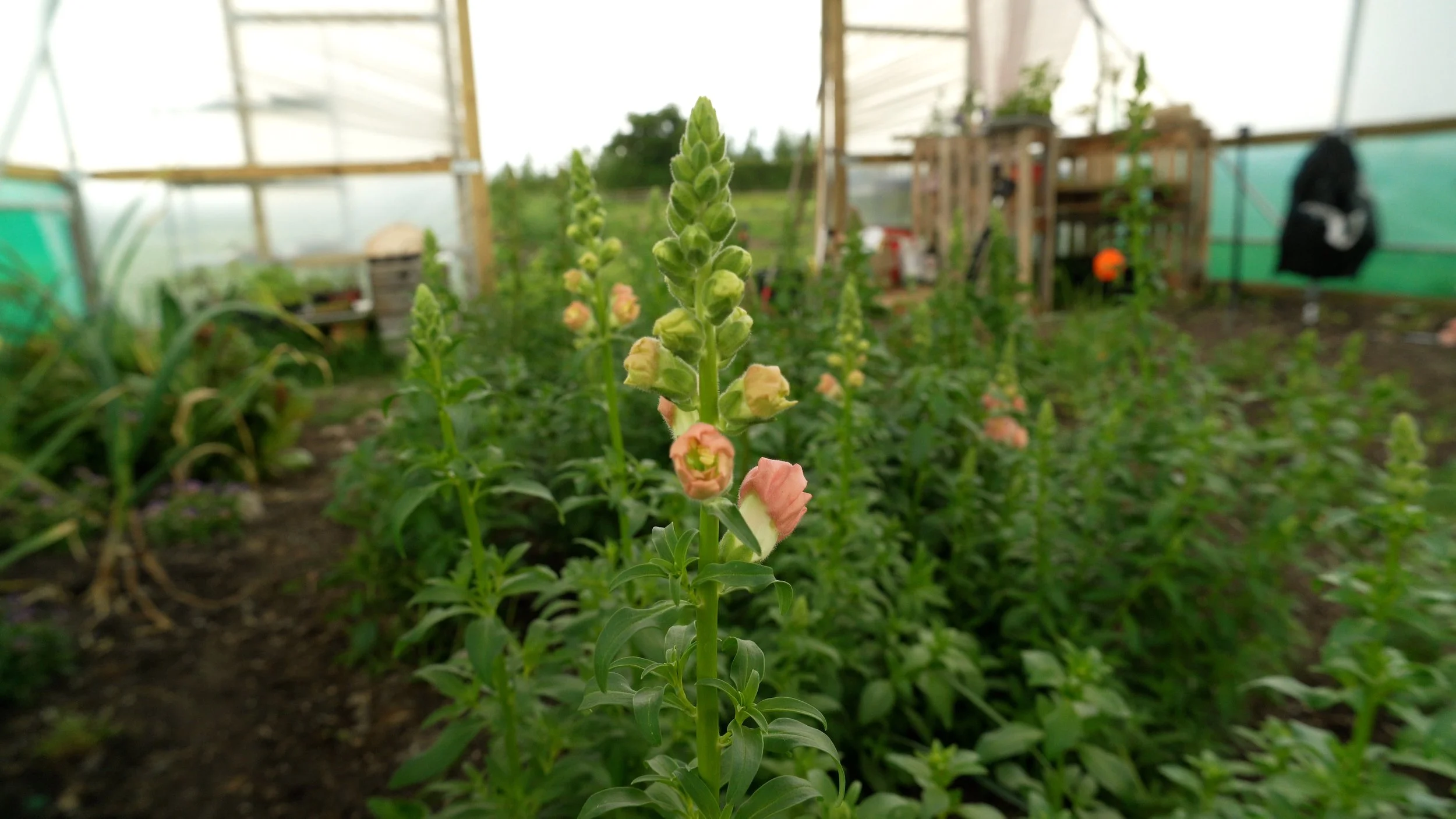
Snapdragons
Snapdragons behave similarly to larkspur.
The first central stem is usually the strongest and most valuable stem for cutting.
Pinching will:
Delay flowering
Produce more stems
Result in multiple smaller spikes
Commercial growers often leave snapdragons unpinched, but many home gardeners prefer the increased stem count.
An added bonus is that the tops removed during pinching can often be rooted as cuttings.

Snapdragons
Flowers That Should Not Be Pinched
Stocks
Stocks are bred to produce a single flowering stem per plant.
Spring Bulbs
Avoid pinching:
Tulips
Daffodils
Ranunculus
Alliums
These plants naturally produce only one or a few stems per bulb and do not respond to pinching.
Single-Stem Sunflowers
Some sunflower varieties are bred specifically to produce one flower per plant.
Examples include:
Sunrich series
ProCut series
These should not be pinched.
However, branching sunflower varieties can benefit greatly from pinching and will produce multiple flower stems.
Flowers That Produce Stems From the Base
Some plants naturally produce numerous flowering stems from the crown without needing intervention.
Examples include:
Peonies
Delphiniums
Poppies
Statice
Naturally Branching Flowers
Some flowers branch freely on their own and usually don't require pinching.
Examples include:
Ammi
Nigella
Orlaya
Greek Cress
Should You Pinch Your Cut Flower Plants?
The simplest answer is: experiment.
Pinch half of your plants and leave the other half untouched. By midsummer you'll be able to compare the results and decide which approach suits your garden, growing style, or flower business best.
Pinching doesn’t increase a plant's total output but it changes where the energy is distributed. Sometimes one large stem is exactly what you want. Other times, a bushier plant covered in blooms is far more valuable.
Understanding the difference allows you to make the right choice for every crop you grow.