
How to Take Dahlia Cuttings and Multiply Your Plants
If you love dahlias, here’s one of the best tricks you can learn: turn a single tuber into 5, 10, or even 20 new plants—completely for free! Taking cuttings from your dahlia tubers is fast, easy, and a great way to multiply your favorite varieties. In this post, I’ll show you exactly when to take cuttings, how to prepare them, and how to root them successfully.
Why Take Dahlia Cuttings?
Dahlia cuttings are a fast and reliable way to:
Multiply your favorite varieties quickly.
Keep rare or heirloom dahlias going year after year.
Reduce costs compared to buying extra tubers.
Get strong, healthy plants that have more vibrant blooms.
With the right technique, one tuber can become 10–20 plants, making this a game-changer for both hobbyists and flower farmers.
What You’ll Need for Taking Dahlia Cuttings
Before you start, gather the following materials:
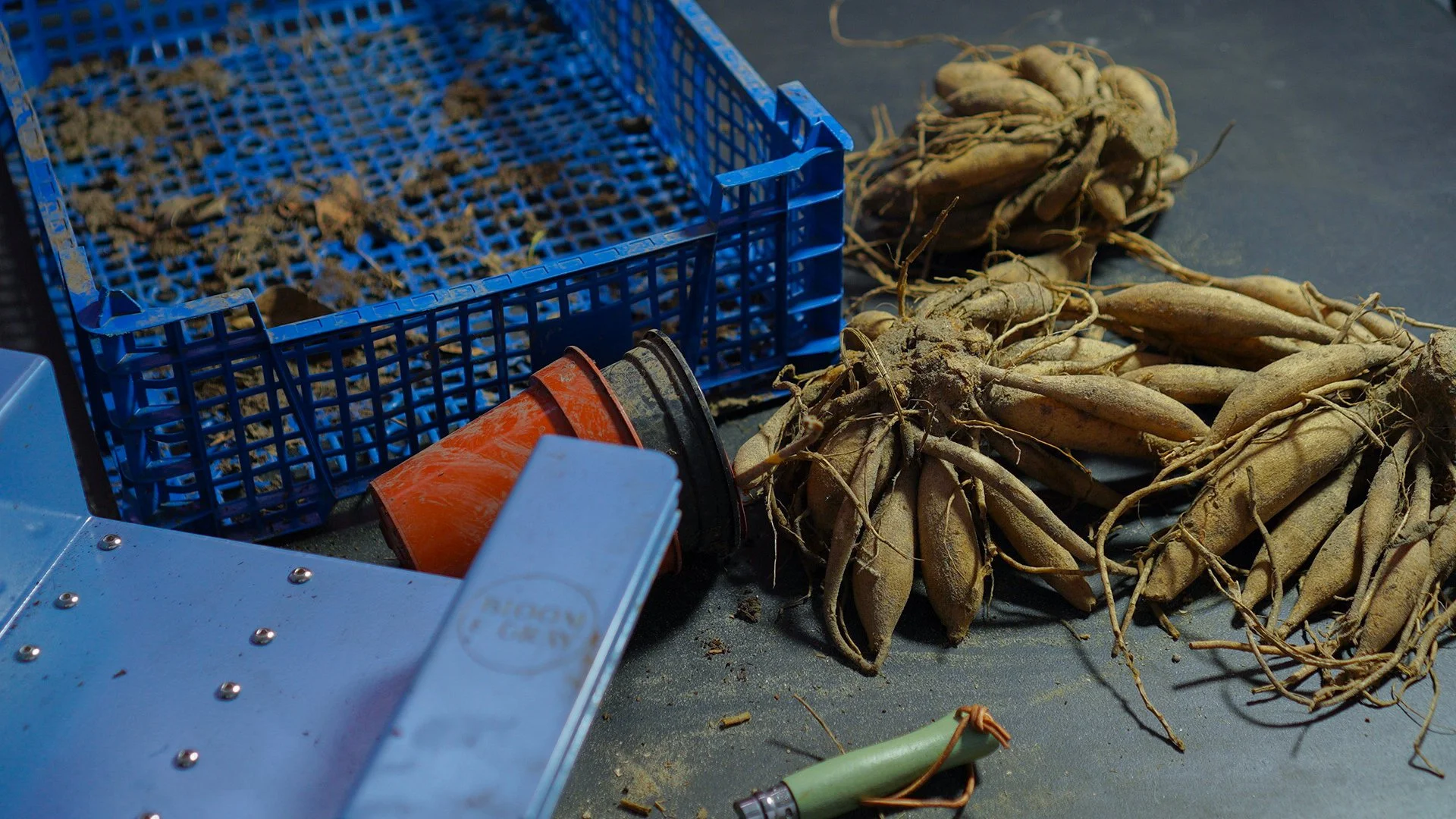
Dahlia tubers: You can take cuttings from tubers you grew last season or from new ones you’ve just bought. If you’re using last year’s plants, you’ll need to dig them up in autumn and store them, or lift them in spring if you’ve overwintered them in the ground (don’t forget to label them so you know what they are).
Sharp knife or secateurs: Sterilize tools to prevent disease and make clean cuts.
Shallow Trays For Starting Tubers: Ensure good drainage to prevent too much moisture.
Pots or Soil Blocks: For placing cuttings into.
Free-draining propagation mix: Use a good quality compost with perlite, vermiculite or grit for drainage.
Rooting hormone (optional): Encourages faster root development, though dahlias will root without it.
Watering can or spray bottle: Gently mist or water cuttings to maintain moisture.
Humidity cover (optional): A mini greenhouse or clear cover helps retain humidity and prevent drying.
Labels: Useful if you’re working with multiple varieties.
When to Take Dahlia Cuttings
The best time to take dahlia cuttings is early spring. Dahlias are sensitive to frost, so it’s important to start tubers indoors. This gives them time to produce shoots that can be used for cuttings, and it allows those cuttings time to root and grow into strong plants before planting them outside in late spring.
You can take cuttings from tubers you grew last season or from new ones you’ve just bought. If you’re using last year’s plants, you’ll need to dig them up in autumn and store them, or lift them in spring if you’ve overwintered them in the ground.
Preparing dahlia Tubers for taking cuttings
Before you take cuttings, you’ll want to encourage your tubers to start sprouting. Here’s how to do it:
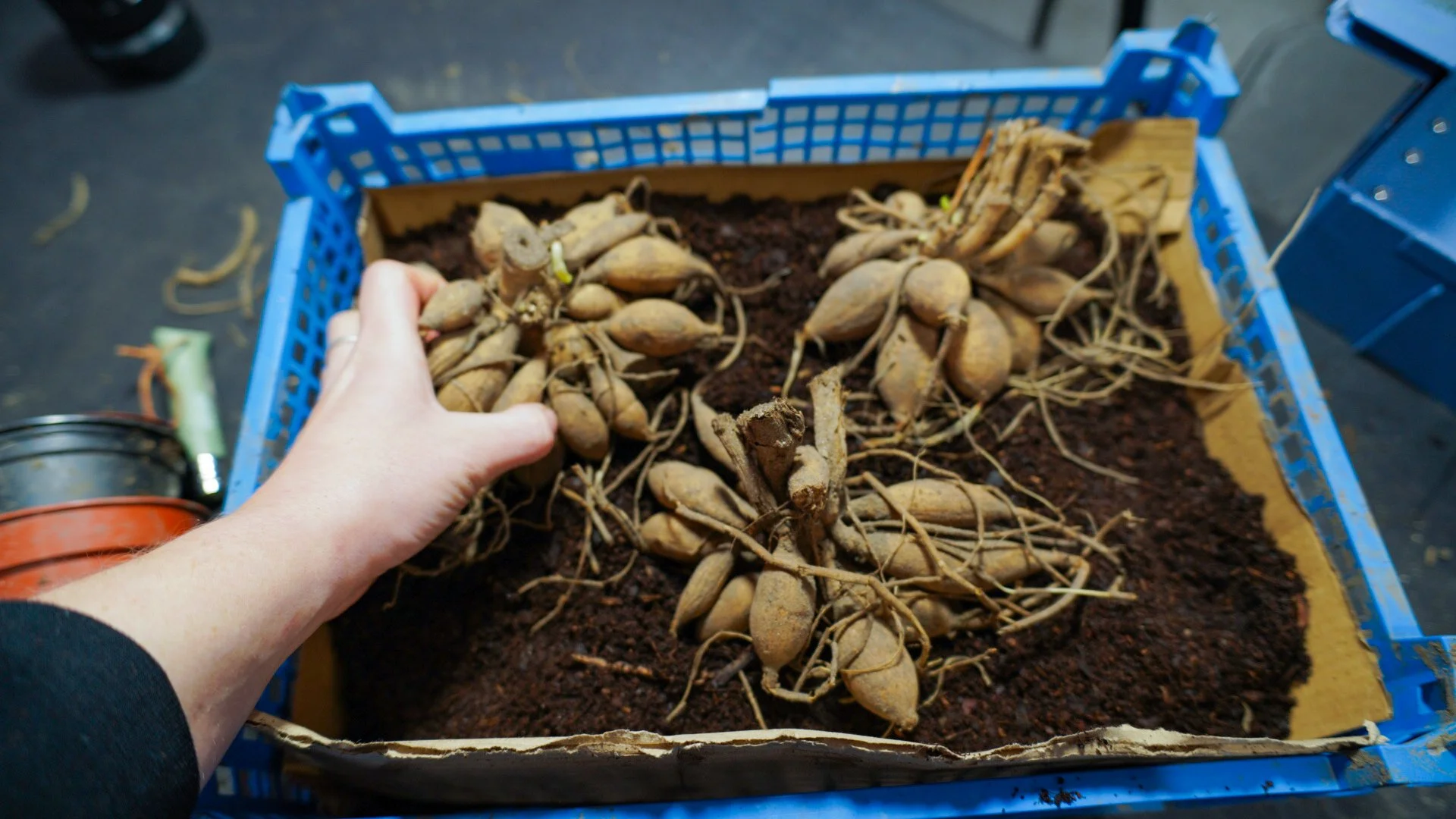
Add a thin layer of compost to a shallow tray or crate with holes for drainage. Use a well draining compost mix, ideally a multi-purpose compost with perlite, grit or vermiculite added for drainage.
Nestle the dahlia tuber on top of the compost.
Add more compost to cover the tuber but leave the crown exposed, this is where you will take the cuttings from.
Water the tubers and place them at 15-20 °C / 59 - 68 °F, and in a well lit location.
New shoots should appear on the tubers within 1-2 weeks.
How to Take the Cutting
Once your shoots are ready, it’s time to take your cutting:
Identify a strong, healthy shoot, 7-8cm in length
Use a knife or secauters to remove the shoot. Try to take a sliver of the tuber too as this increases the chance of rooting. The tuber contains lots of growth hormones and energy which encourages rooting.
Remove the lower leaves to reduce transpiration, leaving only the top ones. If the leaves are large you can also cut these in half.
If you want, you can dip it in rooting hormone to give it a boost, but it’s optional.
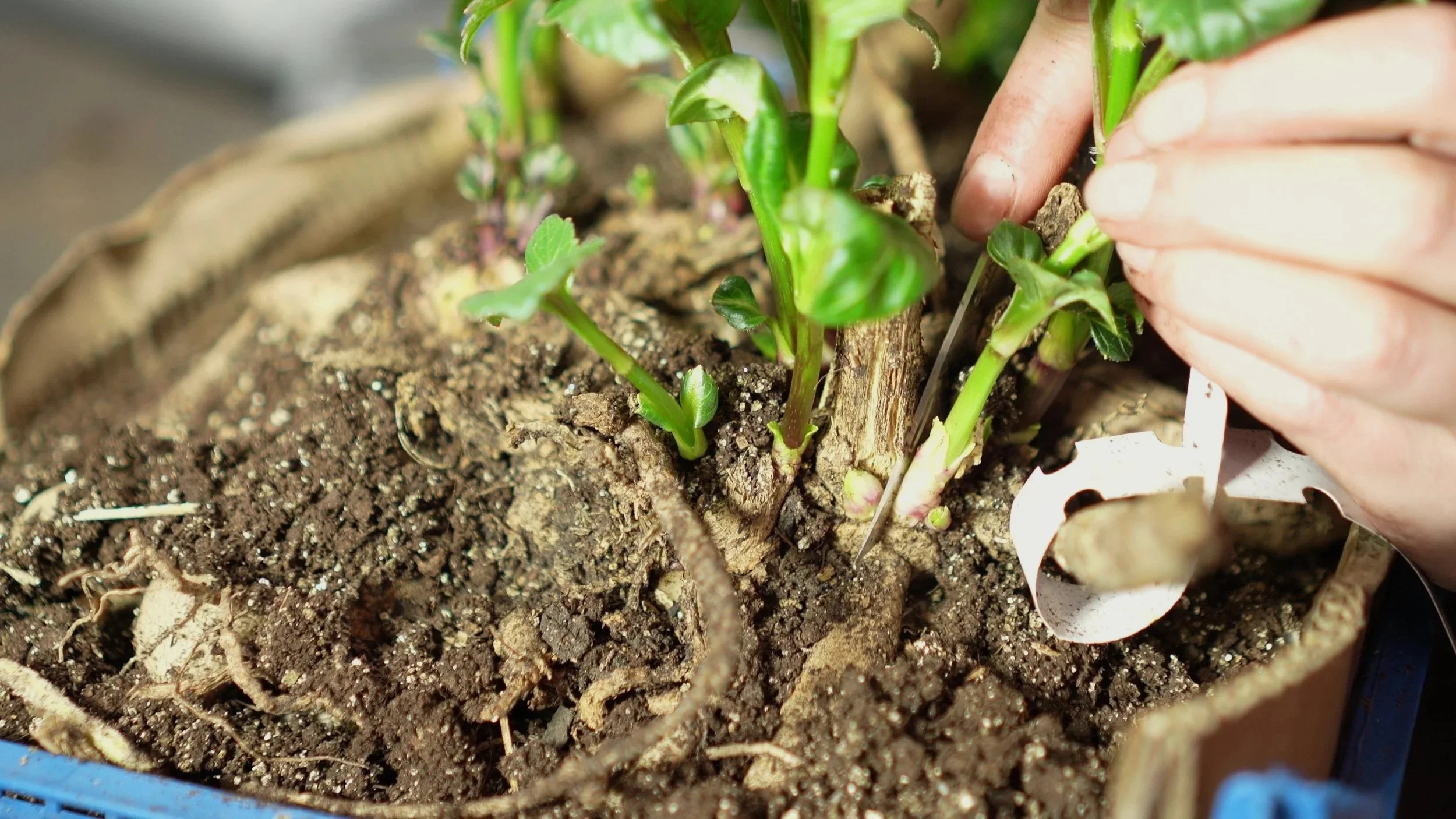
Taking a Dahlia cutting from a tuber
Rooting the Cuttings
There’s two ways you can root cuttings. In pots and in soil blocks. Here’s how to do both.
Pots
Fill a small pot with a well draining compost mix.
Use a pencil or stick to make a hole in the compost mix, preferrably at the edge of the pot to improve drainage.
Push the cutting into the hole in the compost
Water well
Optional: Add a dome or plastic bag over the pot to increase humidity.
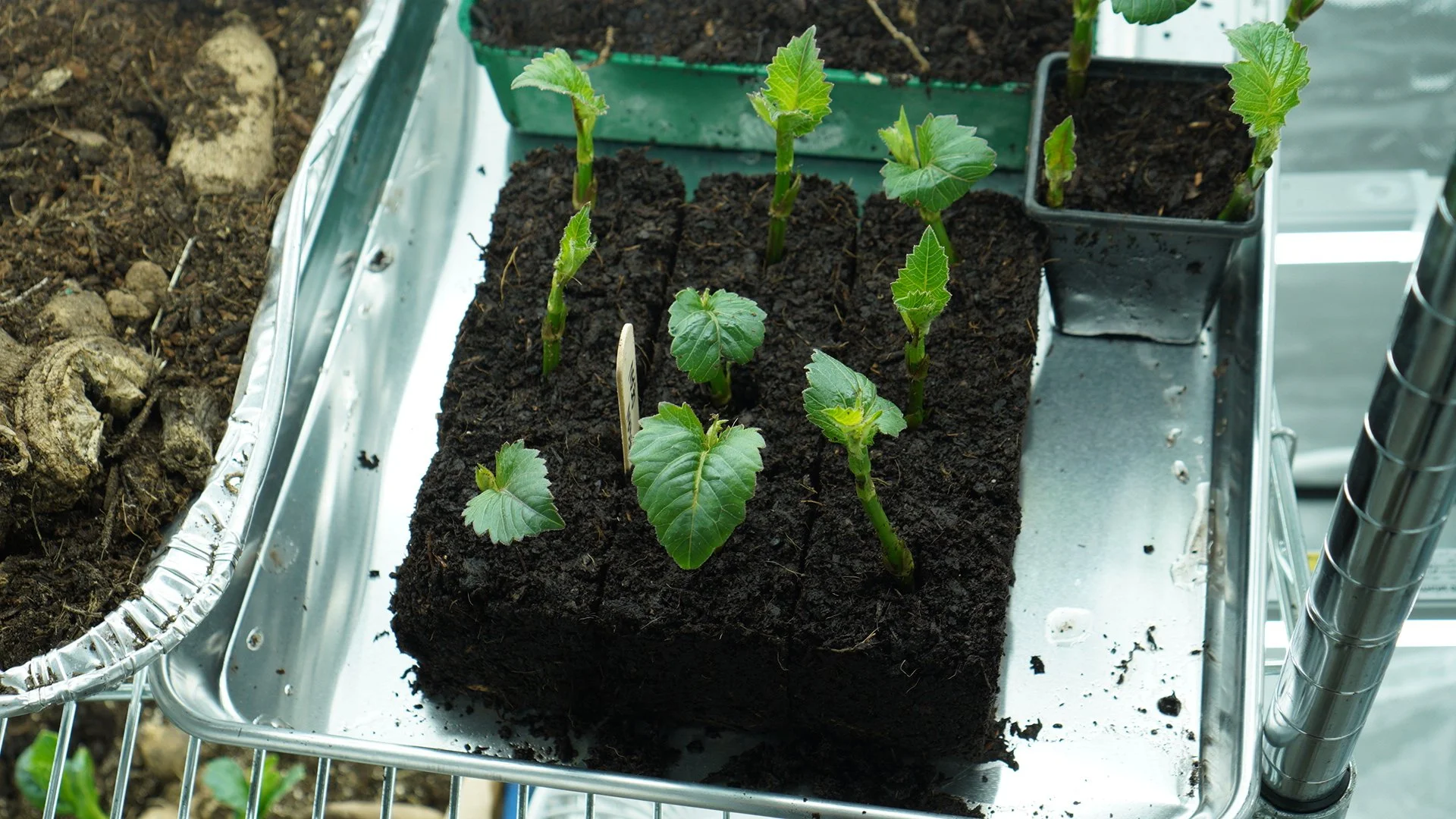
Soil Blocks
Fill your soil blocker using a well draining soil blocking mix
Make a hole in the block before you push them out of the blocker
Push the blocks out
Push the cutting into the hole in the soil block
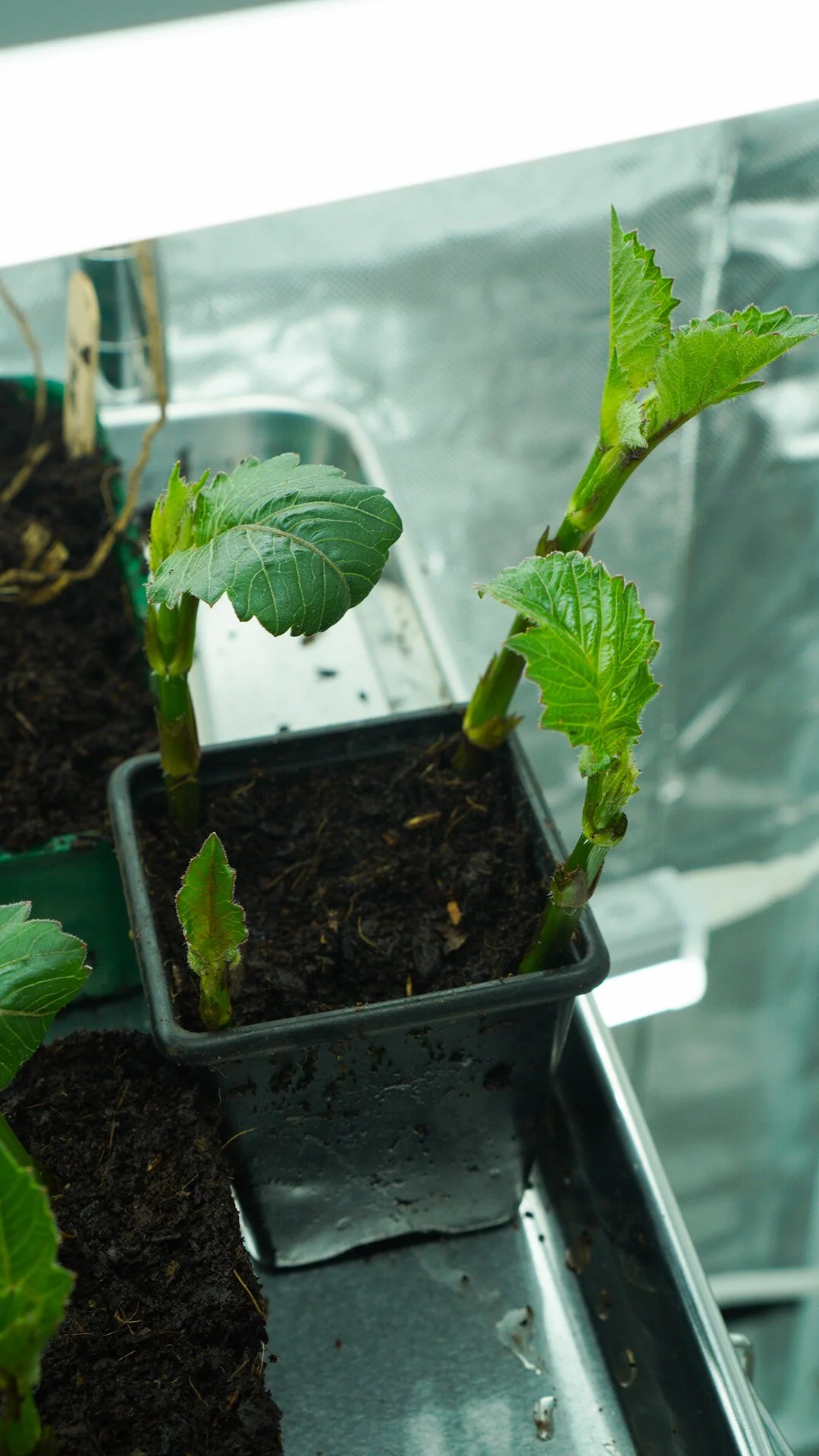
Place the dahlia cuttings somewhere warm (15-20 °C / 59 - 68 °F) and provide them with 14 hours of daylight. Keep them moist but not soggy. Most cuttings will develop roots within 2–3 weeks. Once rooted, they can be potted up and grown like normal dahlia plants before planting out after the risk of frost has passed.
Common Mistakes When Taking Dahlia Cuttings (and How to Fix Them)
Even experienced gardeners can run into problems when propagating dahlias. Here are the most common issues and how to avoid them:
1. Gall
Gall is a bacterial disease that effects dahlias which causes the growth from the tuber to appear dense and clustered. It spreads easily between plants.
Solution: If you notice gall on a tuber you should dispose of it immediately. Avoid adding it to your compost pile and if your tools have touched the plant then make sure to sterilise them. Only take cuttings from healthy tubers.
2. Too Much Moisture
Cuttings need humidity to root, but excess water can cause the stem to rot before roots form.
Solution: Keep the soil moist but not soggy. Use a well-draining propagation mix, and avoid overwatering.
3. Dehydration and Wilting
Cuttings can dry out quickly, especially if the leaves are large or the environment is too warm.
Solution: Remove excess leaves when preparing the cutting to reduce transpiration. Mist cuttings lightly if they start to droop and keep them in a humid environment. Using a mini propagator or clear cover can help retain moisture.
4. Hollow Stem Rot
If the shoot is too mature, the stem may be hollow, which increases the risk of rot before rooting.
Solution: Use younger, thinner shoots rather than older or thicker stems for the best rooting success.
5. Insufficient Light
Cuttings need enough daylight to photosynthesise while forming roots. Without it they will fail to root.
Solution: Place cuttings in bright, indirect light. A south-facing window, greenhouse or a grow light for 12–16 hours a day works well.
By keeping an eye out for these common problems, you can dramatically increase your success rate and ensure healthy, vigorous new plants from your cuttings.
Why Dahlia Cuttings Are a Game-Changer
Taking cuttings is a fantastic way to:
Multiply your favorite dahlias quickly.
Keep rare varieties going year after year.
Save money instead of buying extra tubers.
With the right timing and technique, one tuber can become 10–20 plants ready for your garden or flower farm.
Final Tips
Take cuttings from strong, healthy shoots only.
Keep the cuttings in a warm, bright location.
Be patient—roots can take a couple of weeks to form. Try not to pull the cuttings out to check if they’re forming roots. It can damage them.
Label your cuttings if you’re working with multiple varieties.
Taking dahlia cuttings is easier than most gardeners think, and it’s one of the most rewarding ways to multiply your plants. Give it a try this spring, and watch your dahlia collection grow!